KOREA, PIECE BY PIECE · VOL. 01
Small pieces.
A bigger Korea.
A dish. A line of clothing. A place to call home.
Follow the details that connect Korea, then and now.
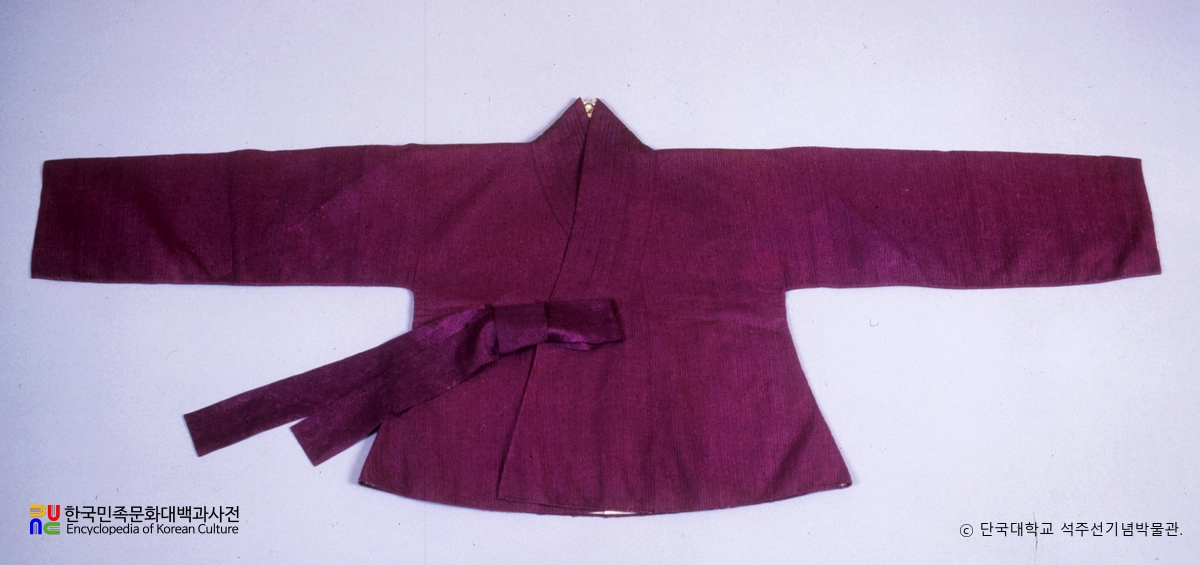
Hanbok: a garment and a way of wearing it.
↗THE LATEST PIECES
A closer look at Korea
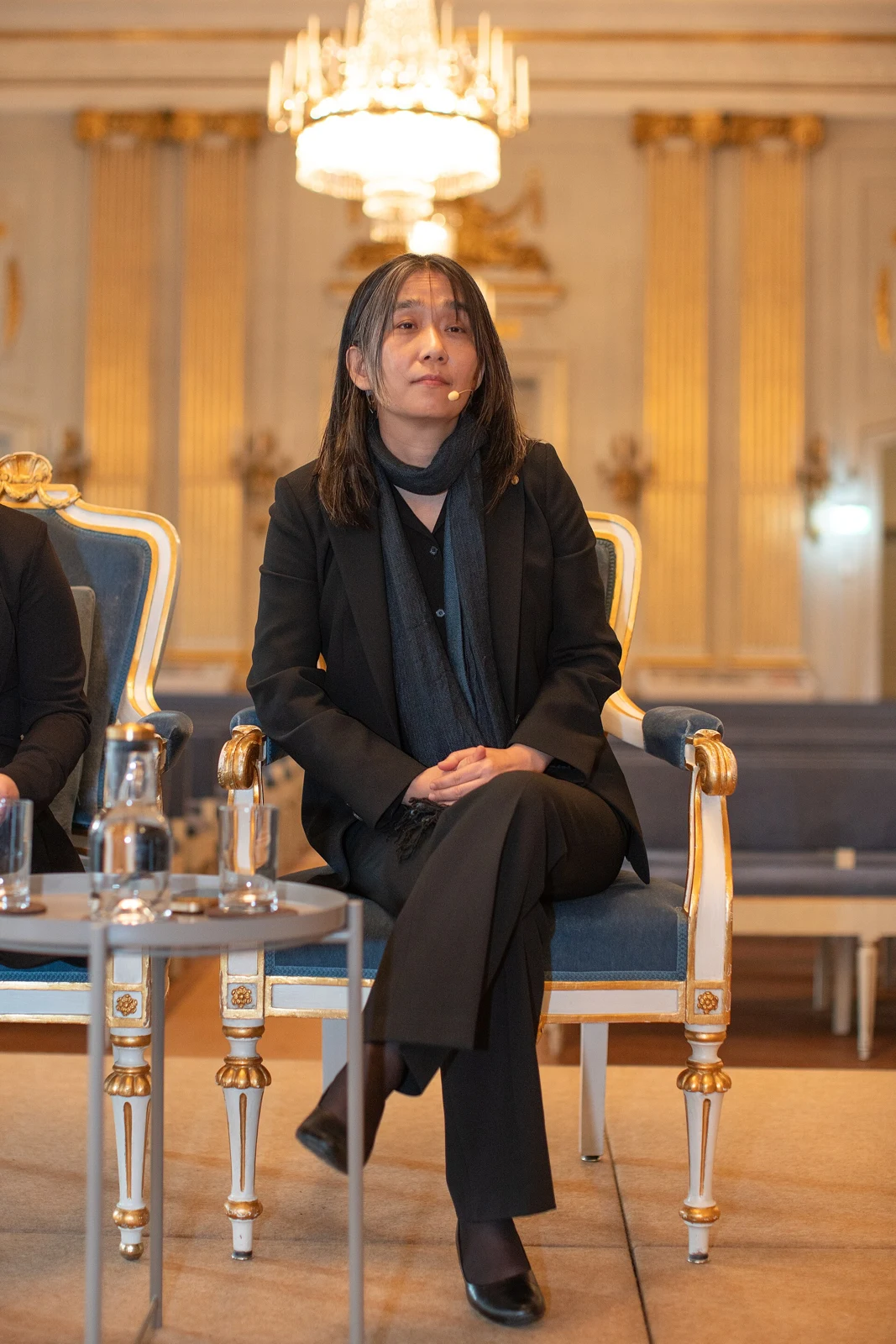
How Korean literature becomes a book in another language
Follow Han Kang, Bora Chung and Hwang Sok-yong through their translators, shared revisions, publishing samples and the work between manuscript and book.
↗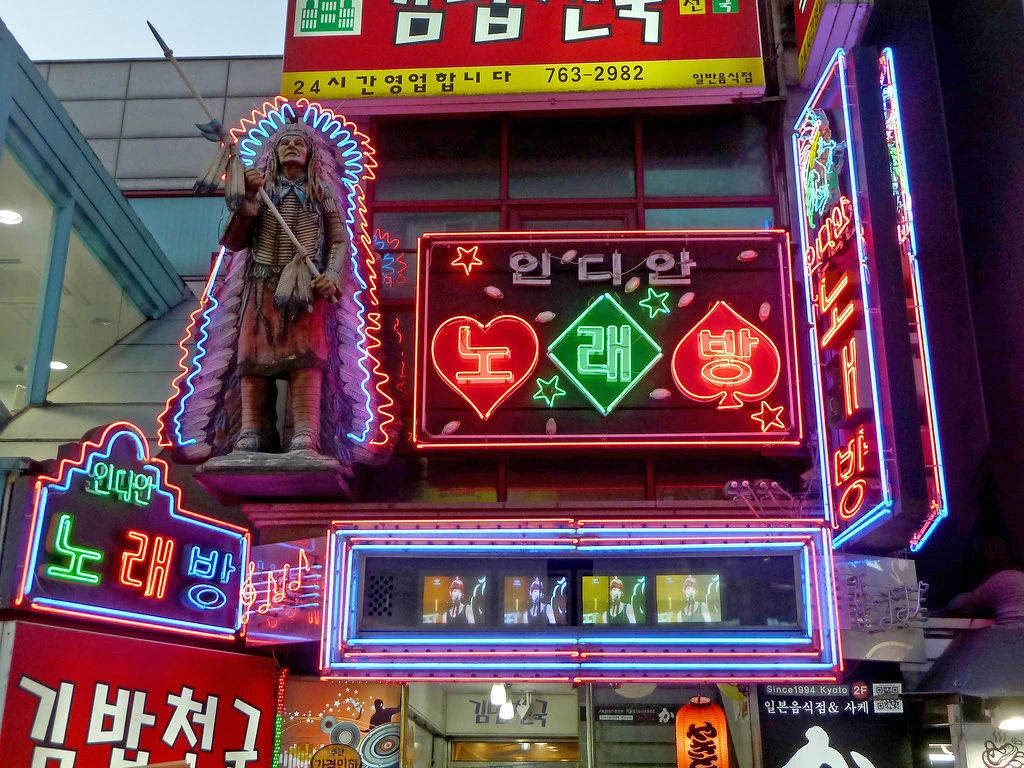
How a noraebang turns a recorded song into your voice
Inside a Korean singing room, song selection, queues and key controls meet the less visible work of making accompaniments and maintaining a repertoire.
↗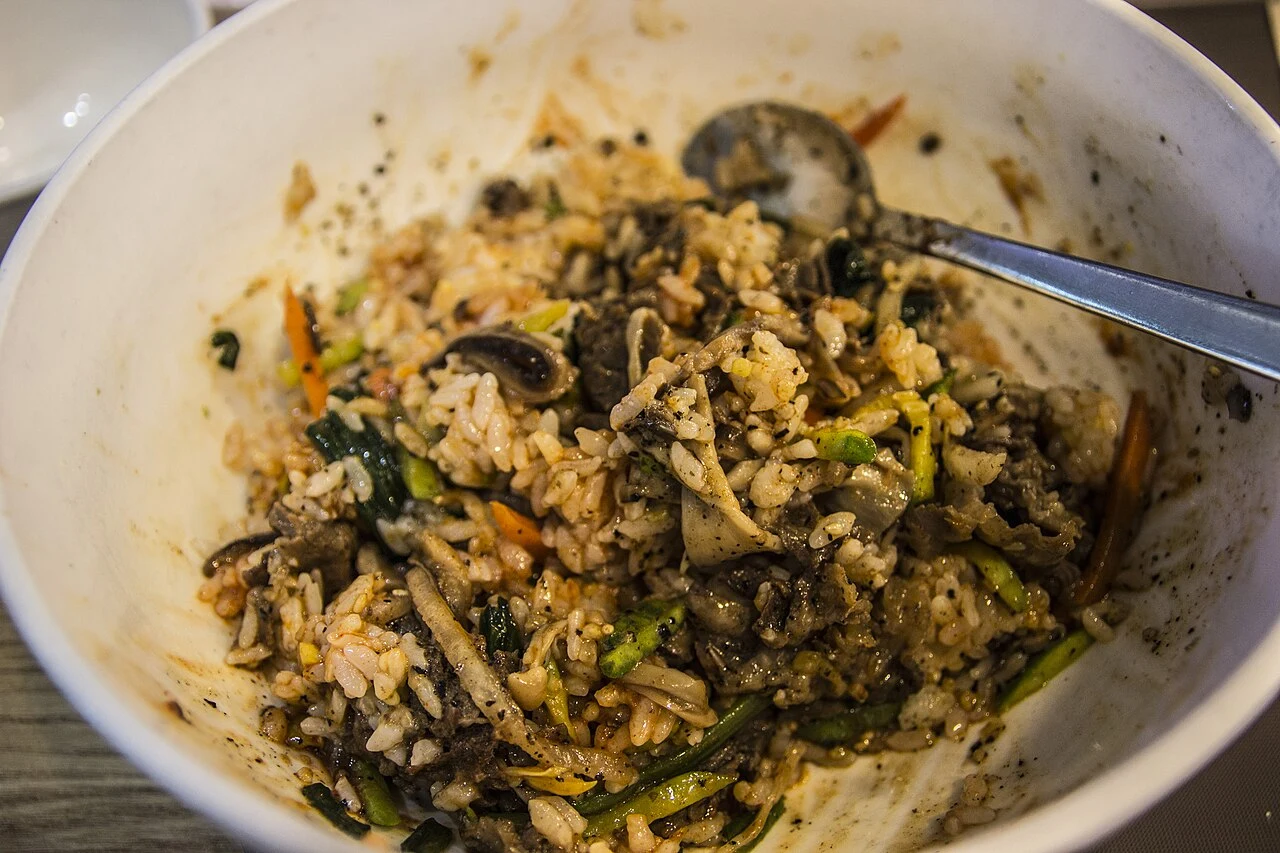
Why prepare everything separately for a meal you will mix?
Bibimbap begins long before a spoon rearranges its colours. Vegetables, rice, sauce and the heat of a stone bowl each need their own preparation.
↗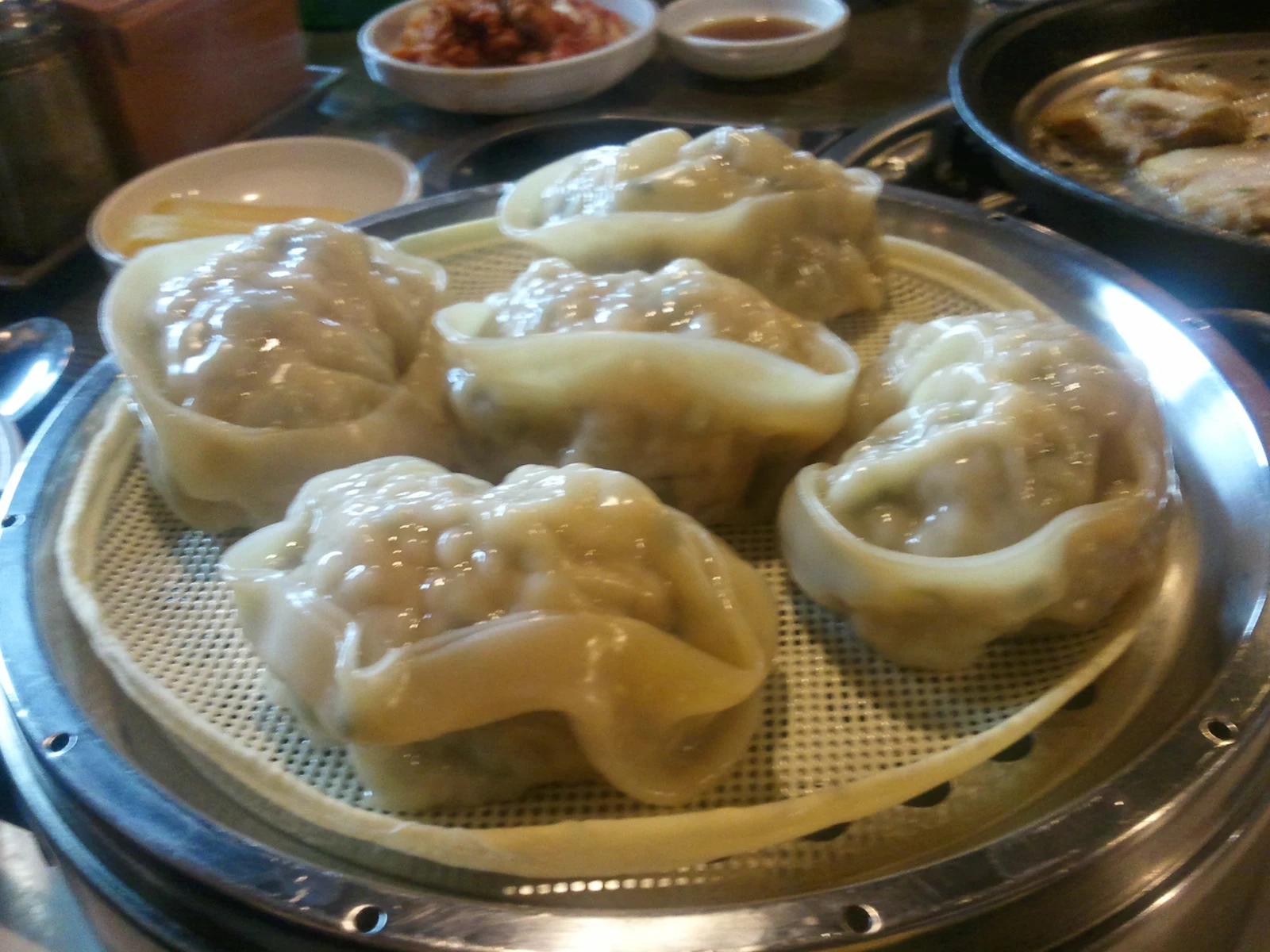
Why does the same dumpling change between steamer and frying pan?
Wrapper thickness, filling moisture, a sealed edge and the final heat connect the making of one mandu to steaming, frying and soup.
↗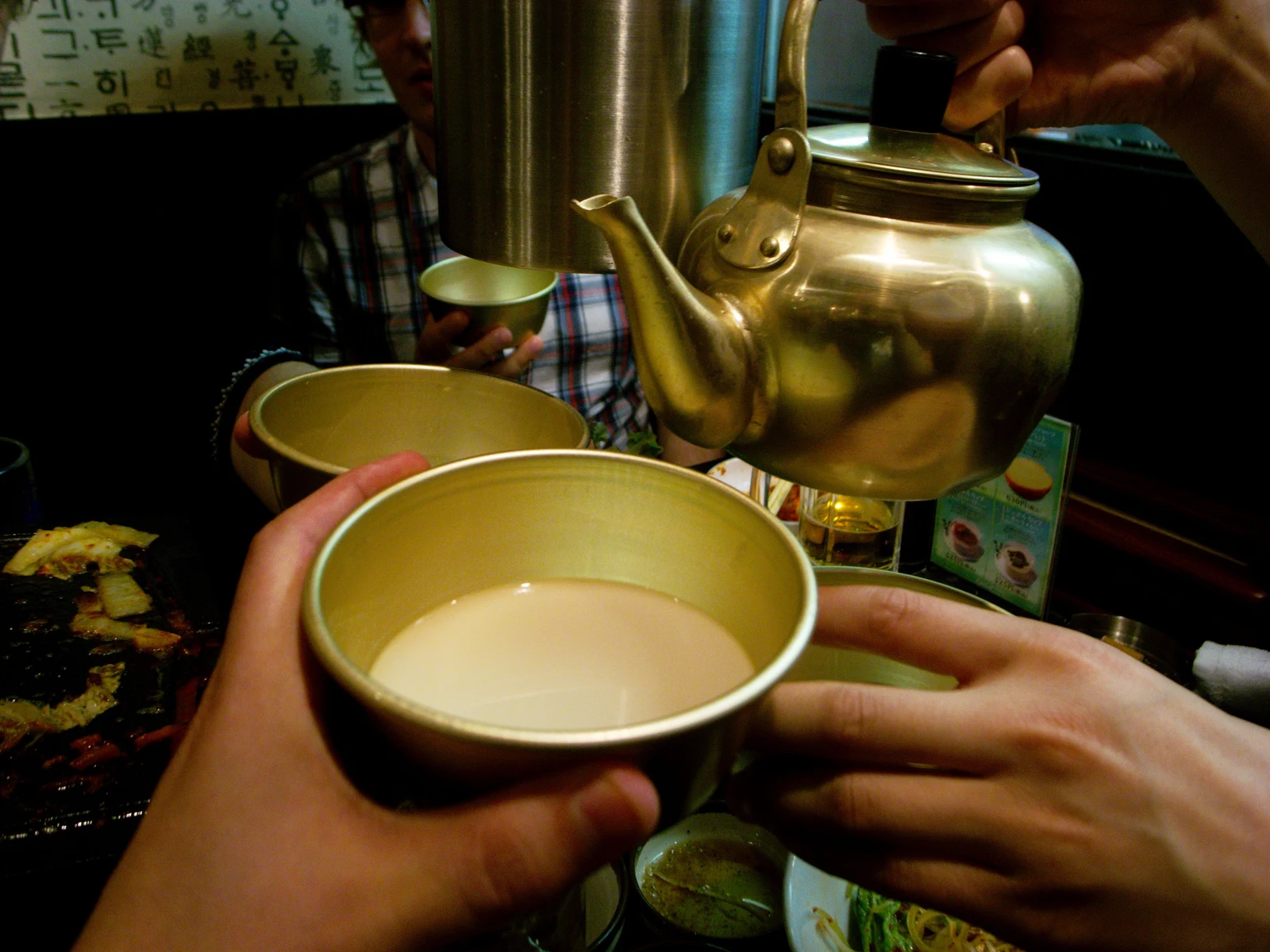
How does white rice become a cloudy drink?
Makgeolli begins with more than rice and water. Starter enzymes, yeast, the preparation of grain and the handling of a finished bottle all shape the drink.
↗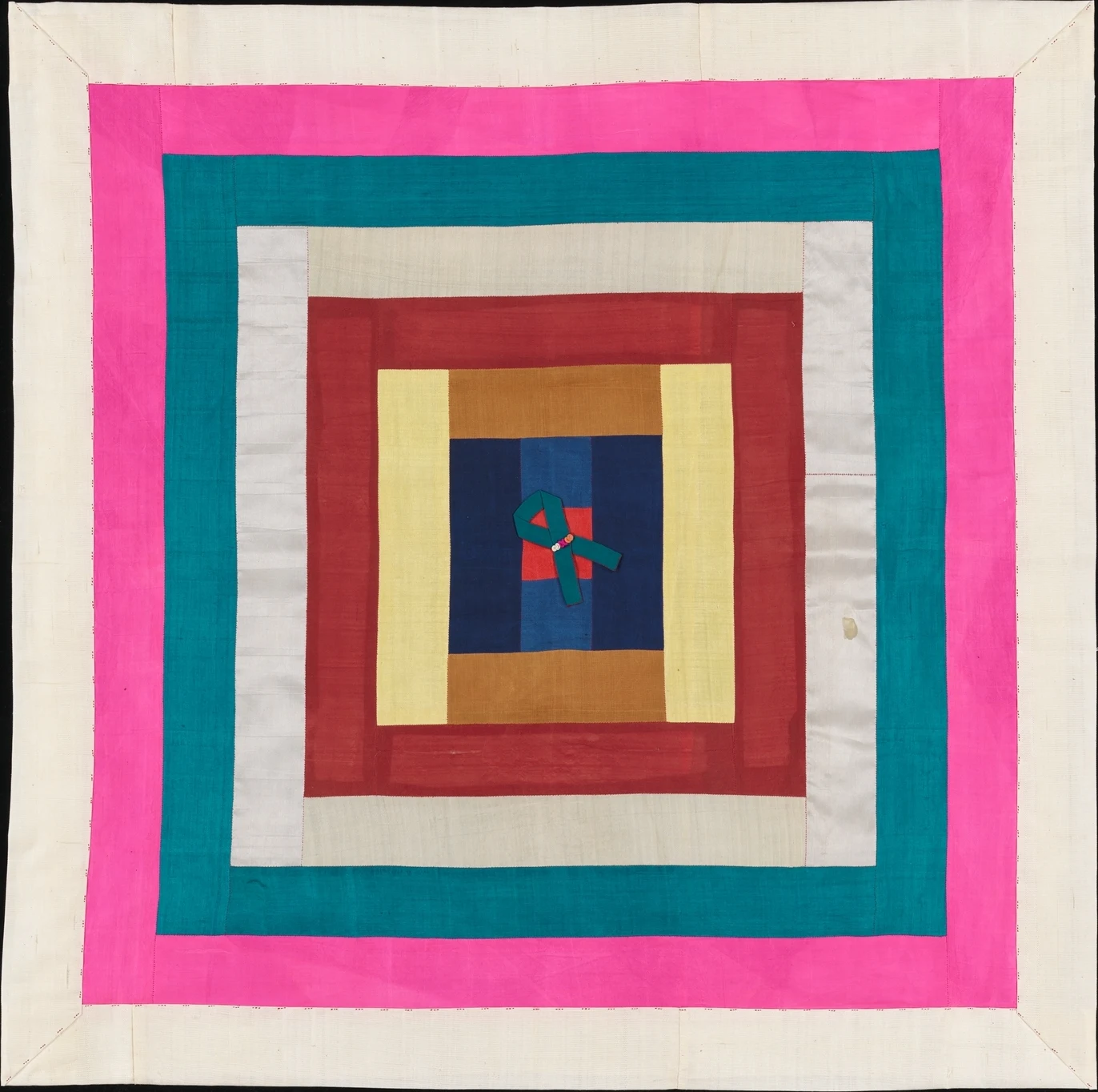
How the lines of Korean jogakbo are made
From choosing remnants and enclosing seam allowances to contemporary work with walls and light, follow the construction and changing uses of Korean patchwork cloths.
↗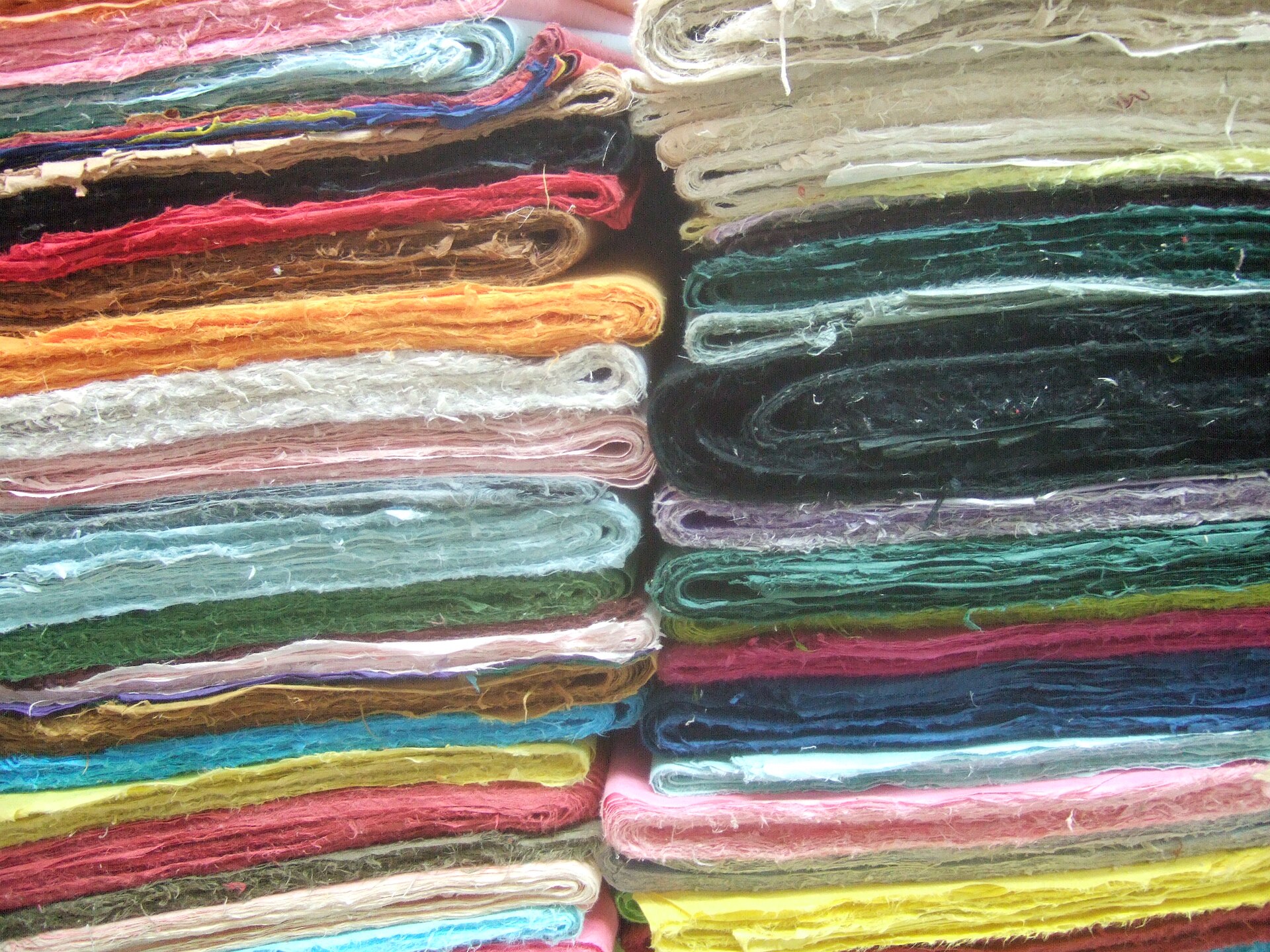
How bark becomes a sheet of Korean hanji
Follow steaming, alkaline cooking, beating, sheet formation and finishing to see how Korean paper becomes a window surface, a conservation material and a sculptural medium.
↗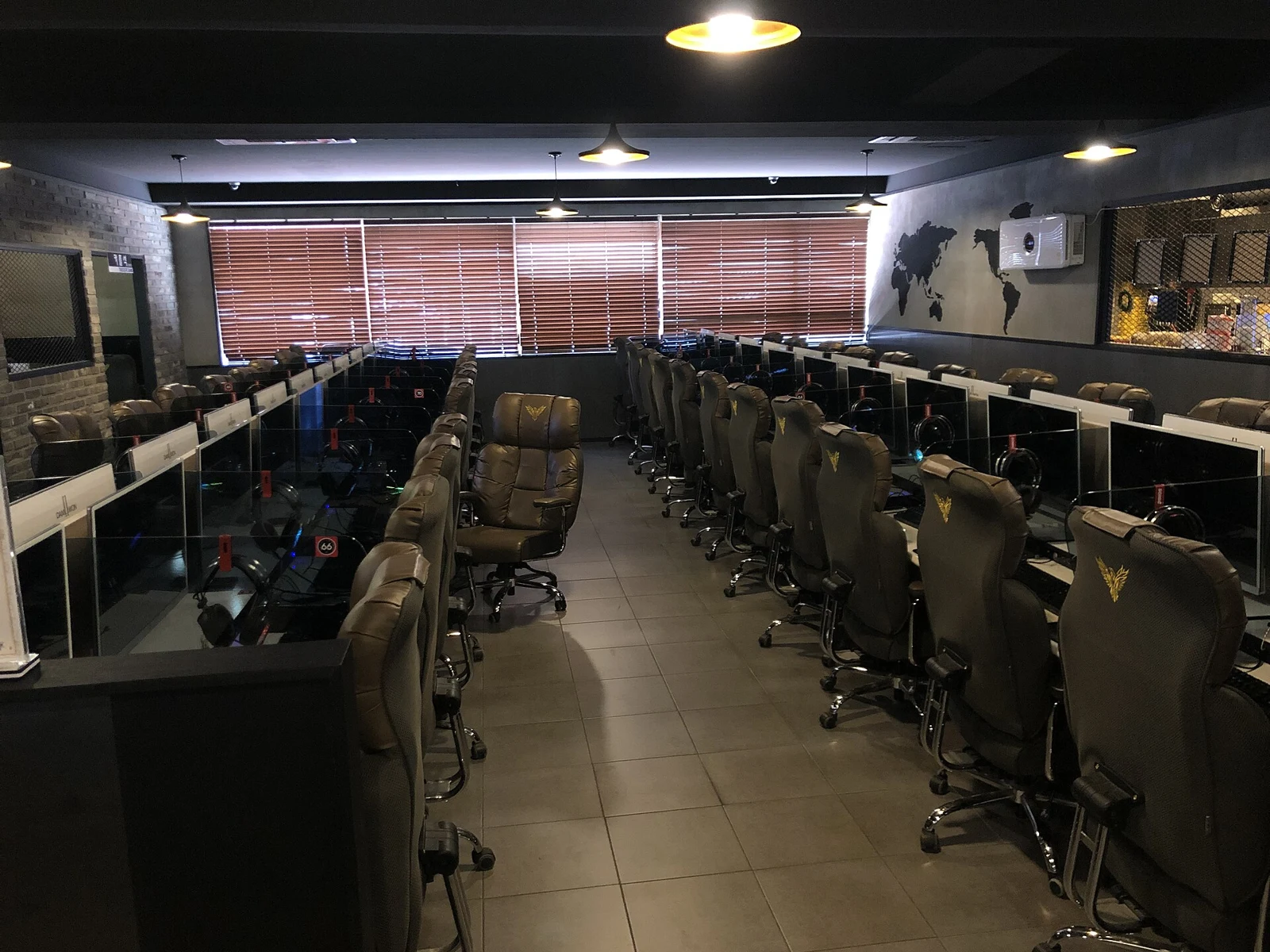
How a game in a Korean PC bang became an arena event
From broadband and StarCraft to television leagues, professional teams and LoL Park, trace the work that turned repeated play into a spectator culture.
↗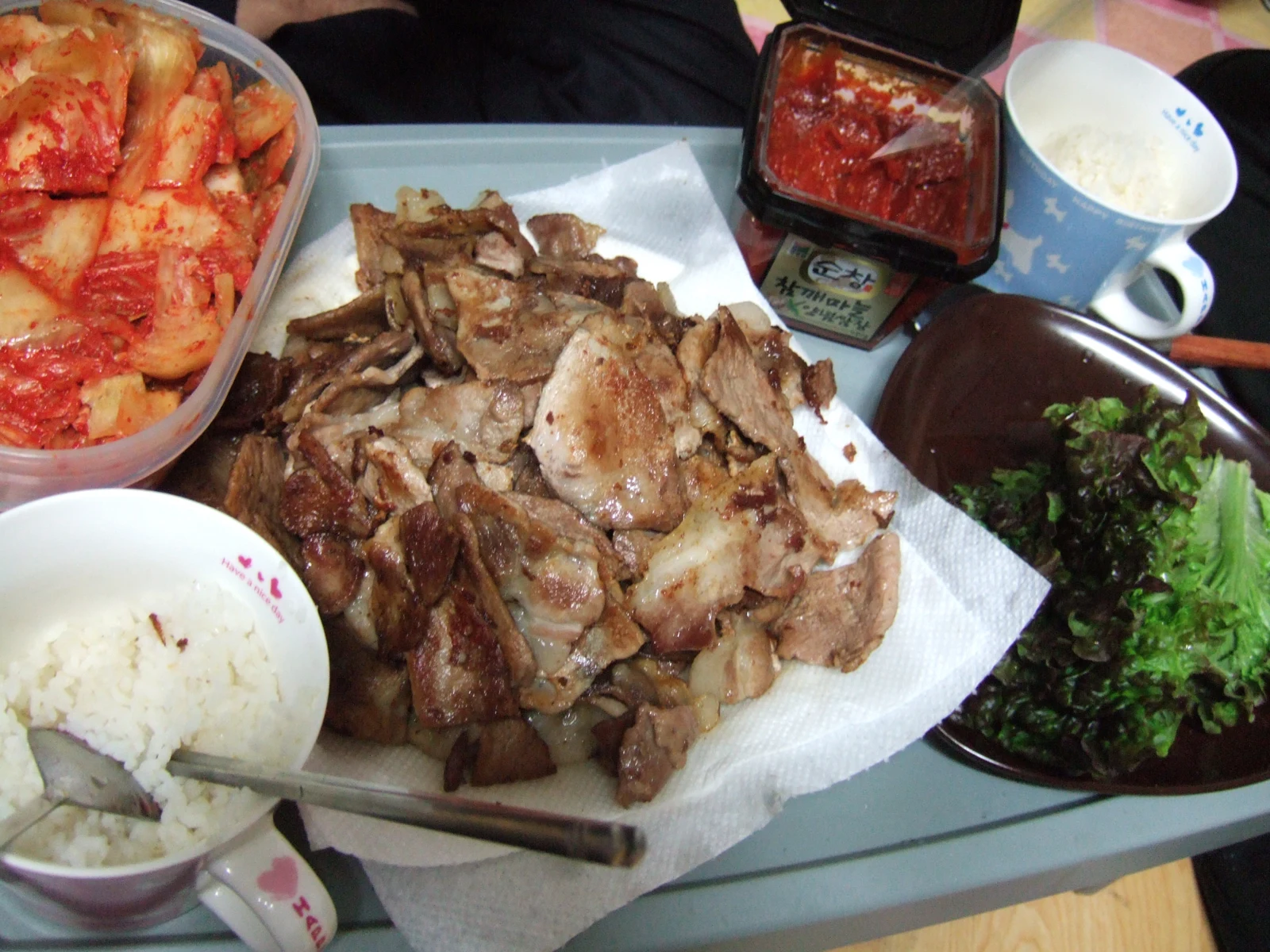
The meat cooks on the grill. Where does the meal become complete?
Korean barbecue moves from heat to a leaf, a spoonful of rice and a little paste. Following that journey reveals more than a plate of meat.
↗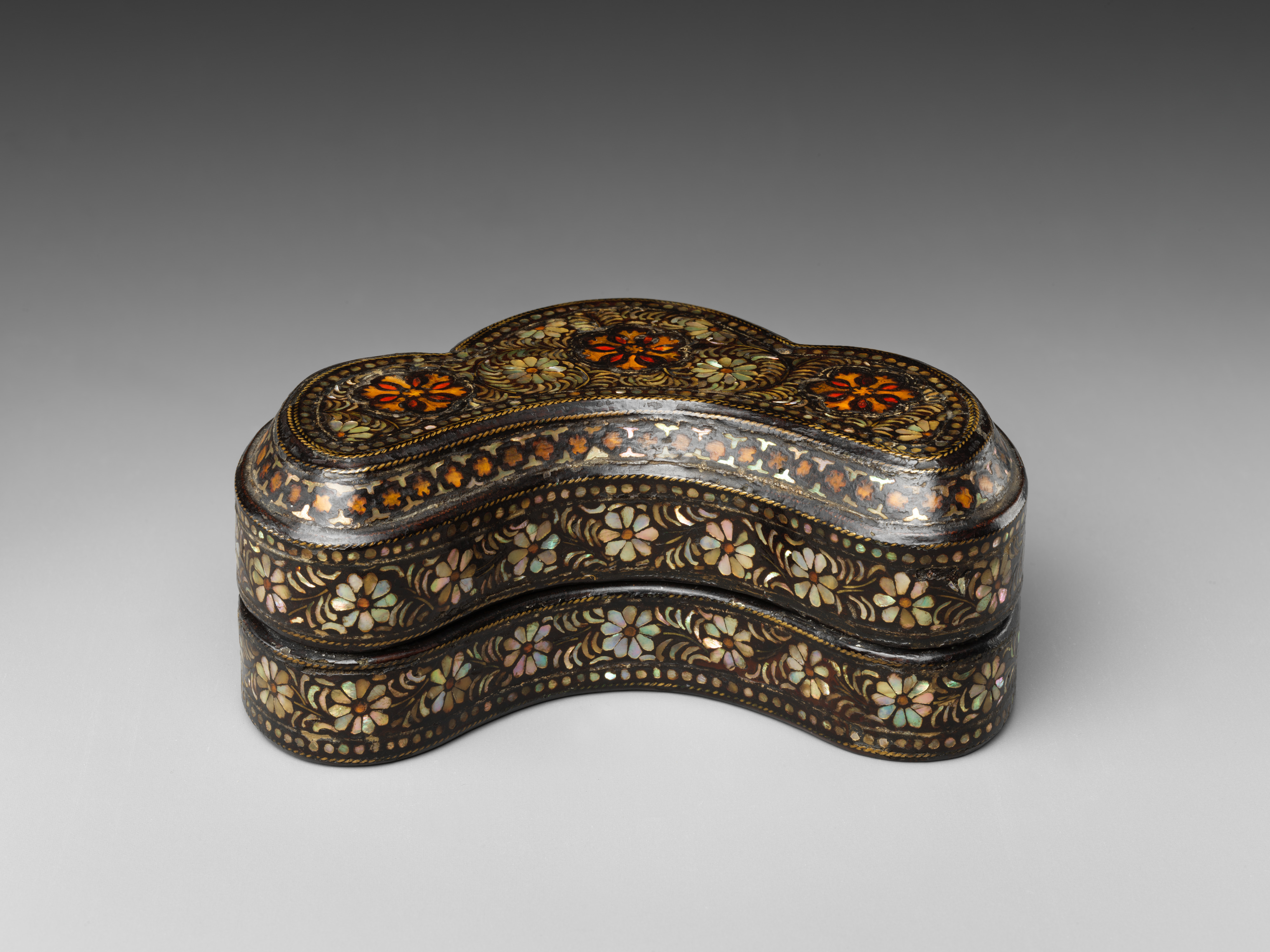
How Korean lacquerware turns shell into light
From cloth-covered wood and two ways of cutting shell to layered lacquer: actual Goryeo, Joseon and contemporary boxes reveal the work behind the shine.
↗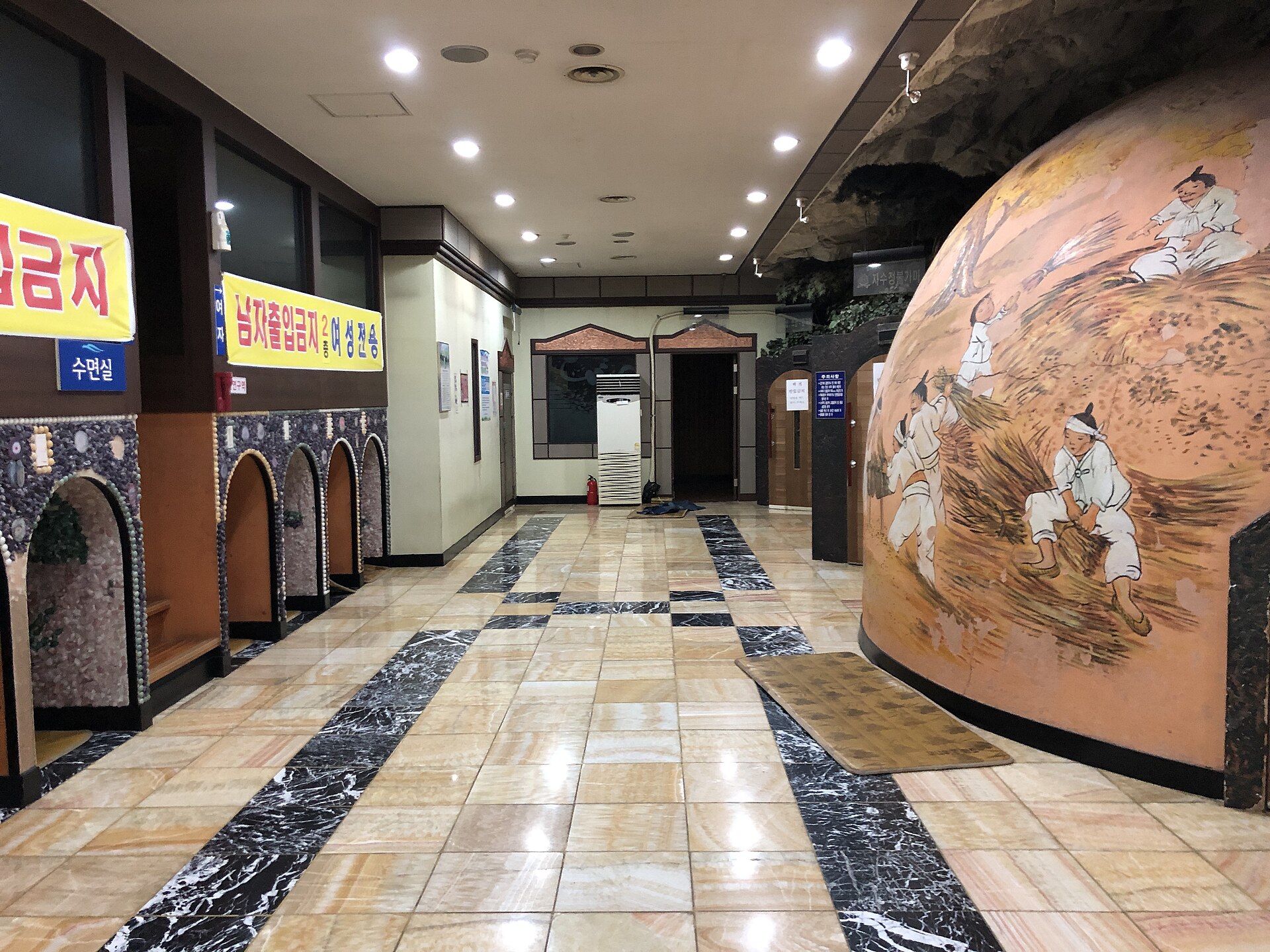
How a jjimjilbang builds the time after bathing
Keys, clothes, wet areas, roasted eggs and sikhye: a visitor’s account and actual charcoal-kiln, women-only and leisure-complex examples explain the layout.
↗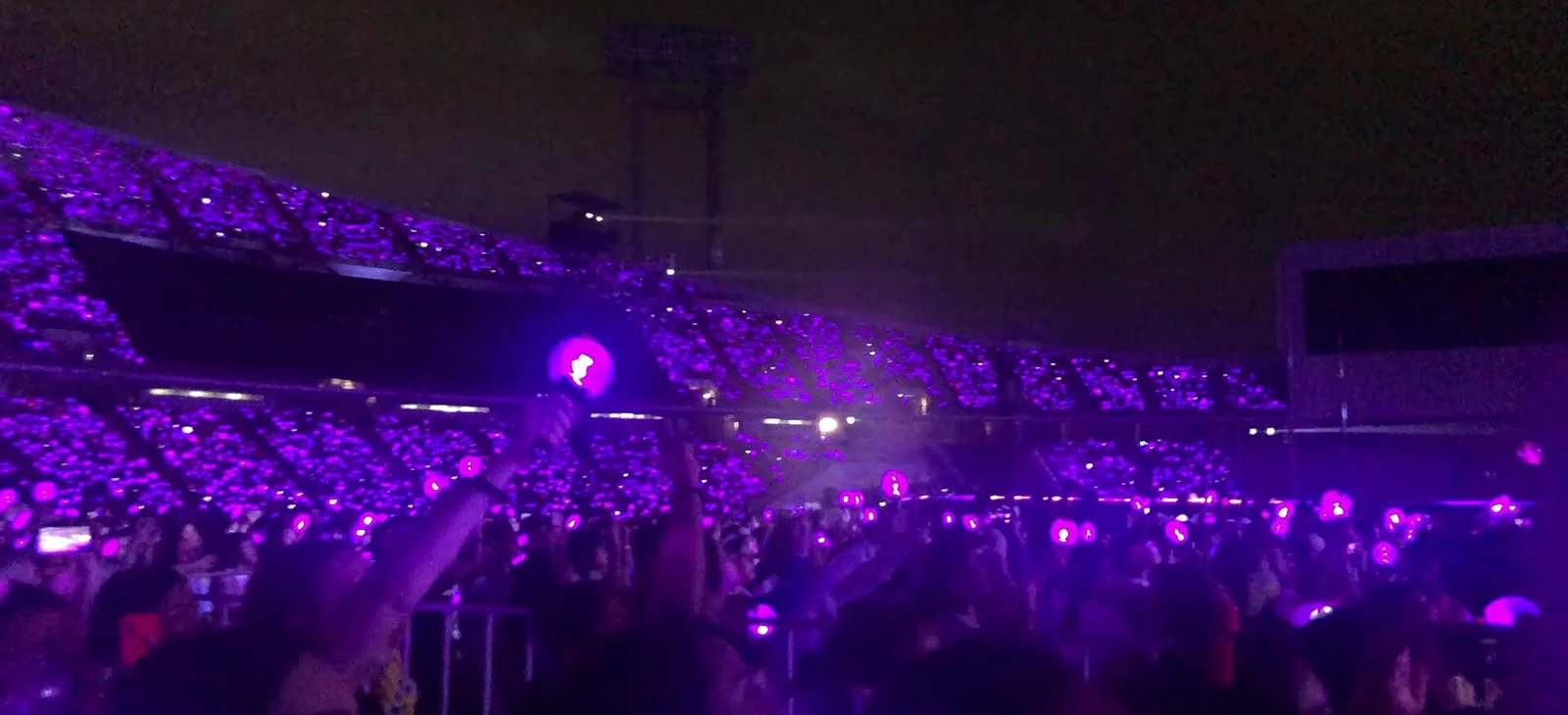
How K-pop light sticks made the audience part of the show
BTS and SEVENTEEN notices reveal how design, seat pairing, support booths and fan chants connect a handheld object with a live performance.
↗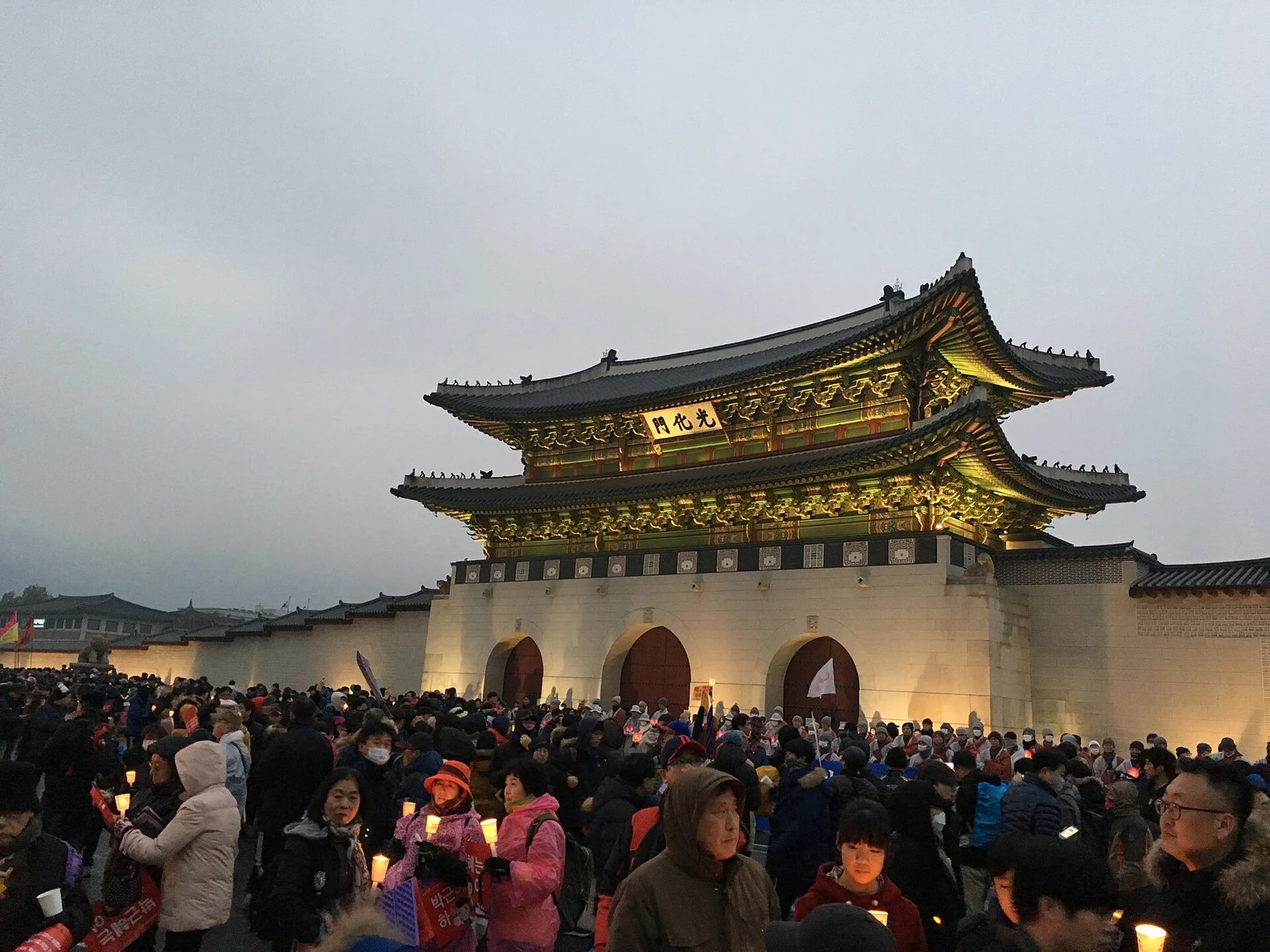
Why South Korean democracy keeps returning to the streets
From election fraud and police torture to the 2024 martial-law declaration, the Kisses protesters and a court attack: follow what happened, how people responded, and the judicial decisions that followed.
↗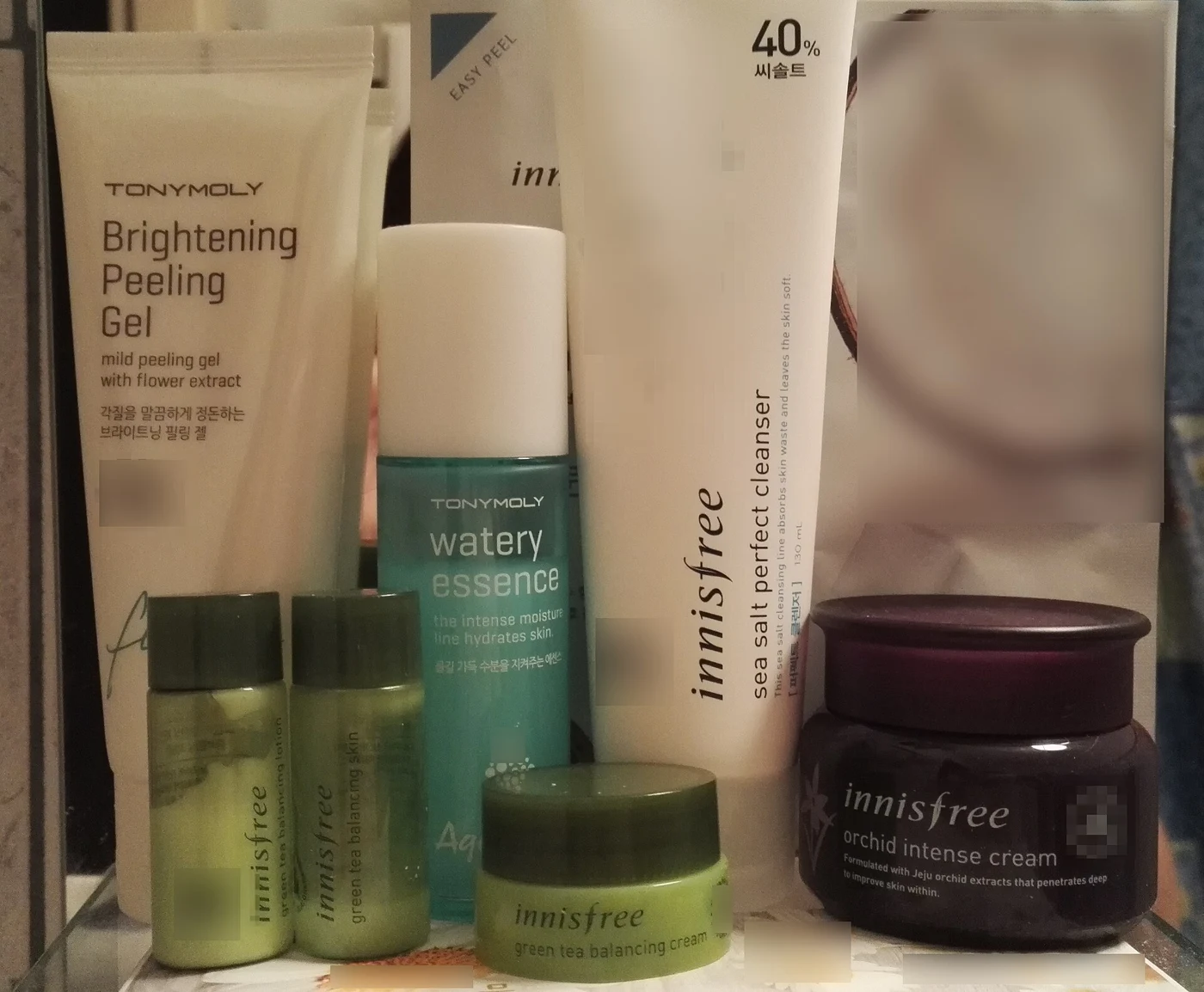
How Korean cosmetics found a place in everyday life abroad
Cushion sponges and refills, folded mask packets and overseas stock: the material journey behind K-beauty.
↗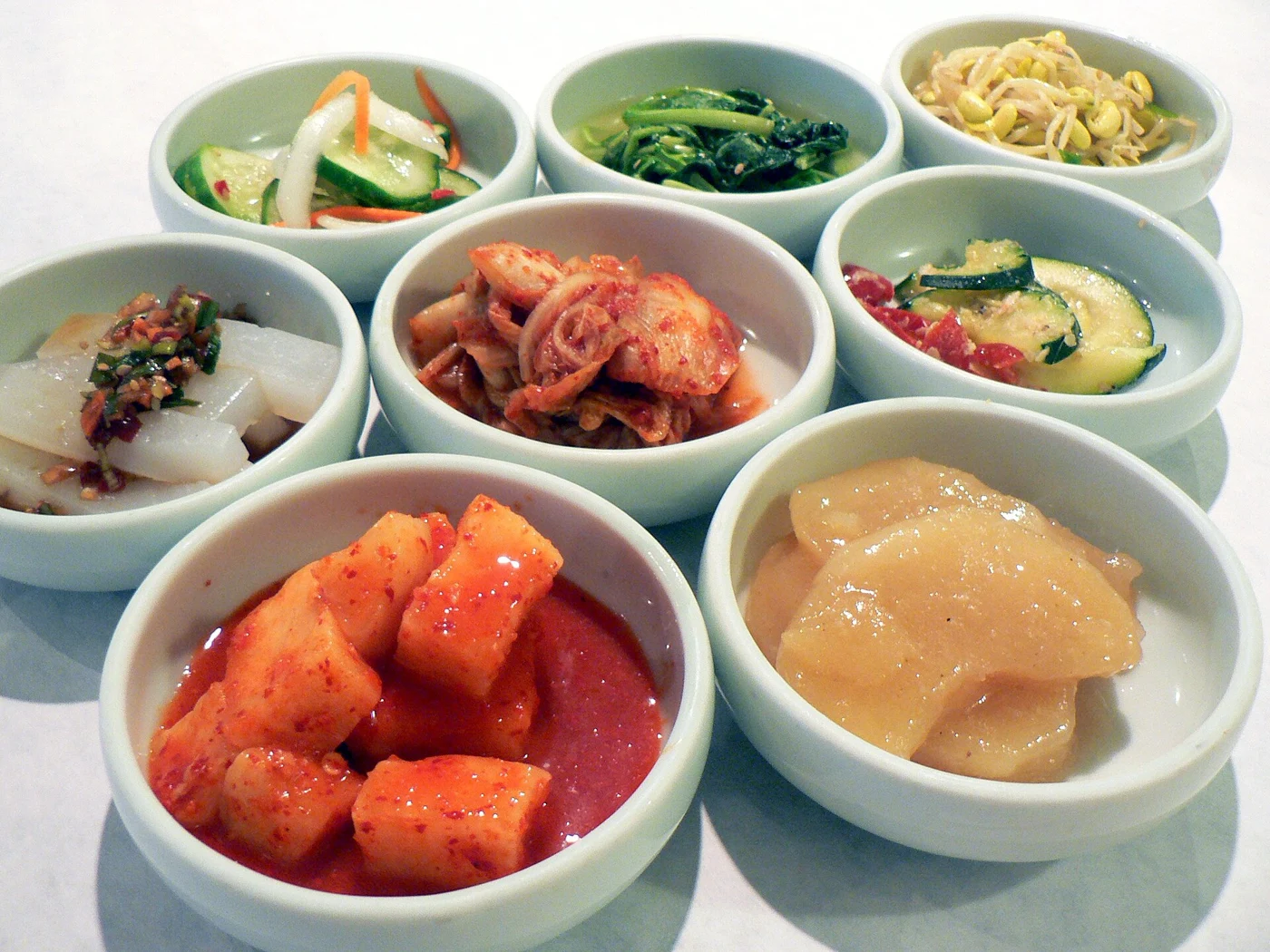
Why does one Korean meal arrive with so many plates?
Washing and pressing greens, browning and braising tofu, building an egg roll: follow the distinct work behind small dishes and a shared dinner.
↗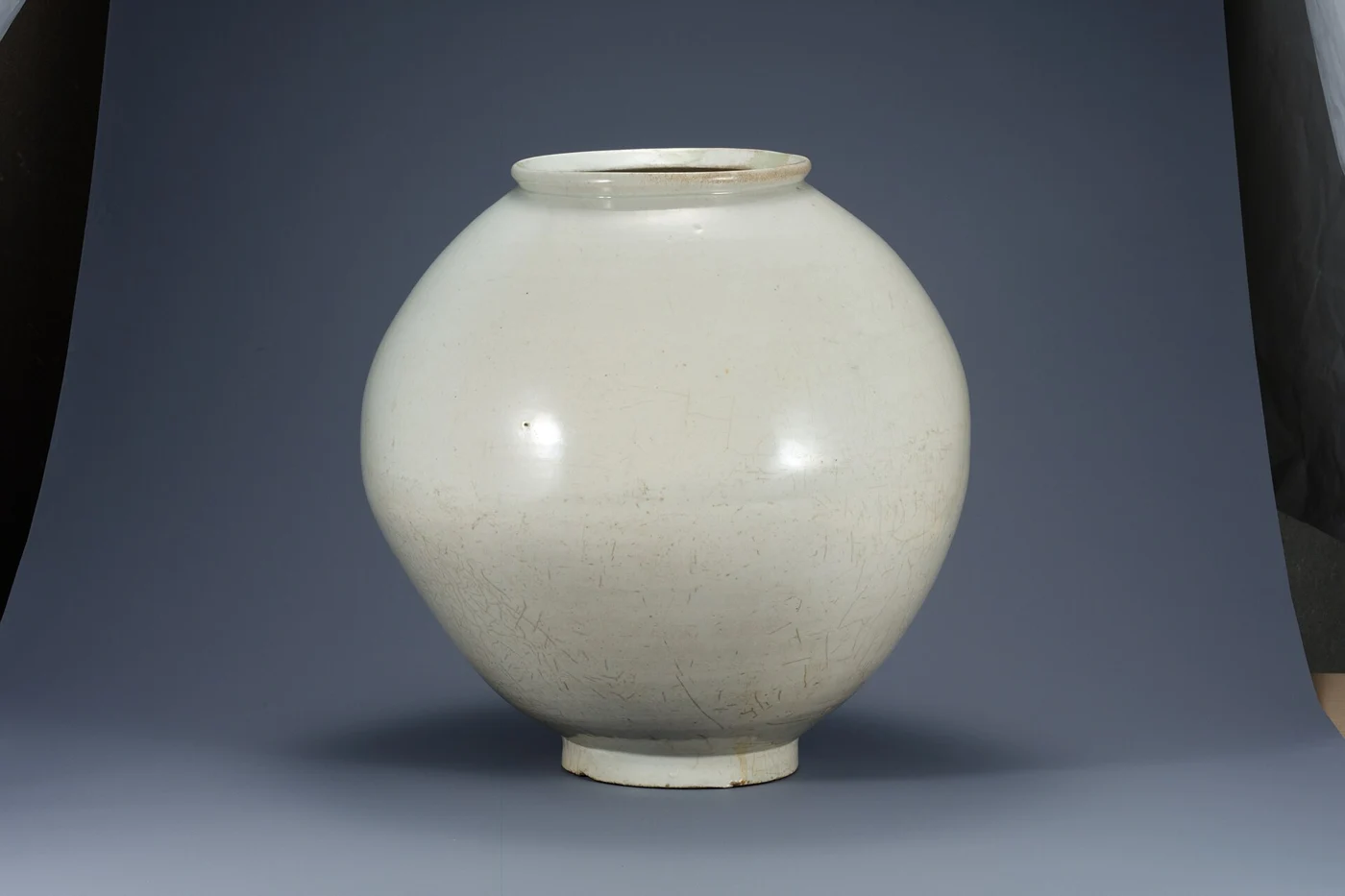
Why is a Korean moon jar not perfectly round?
Two clay halves, a kiln that changes their shape, and a name adopted much later: the moon jar brings together the work of making a vessel and the changing ways of looking at it.
↗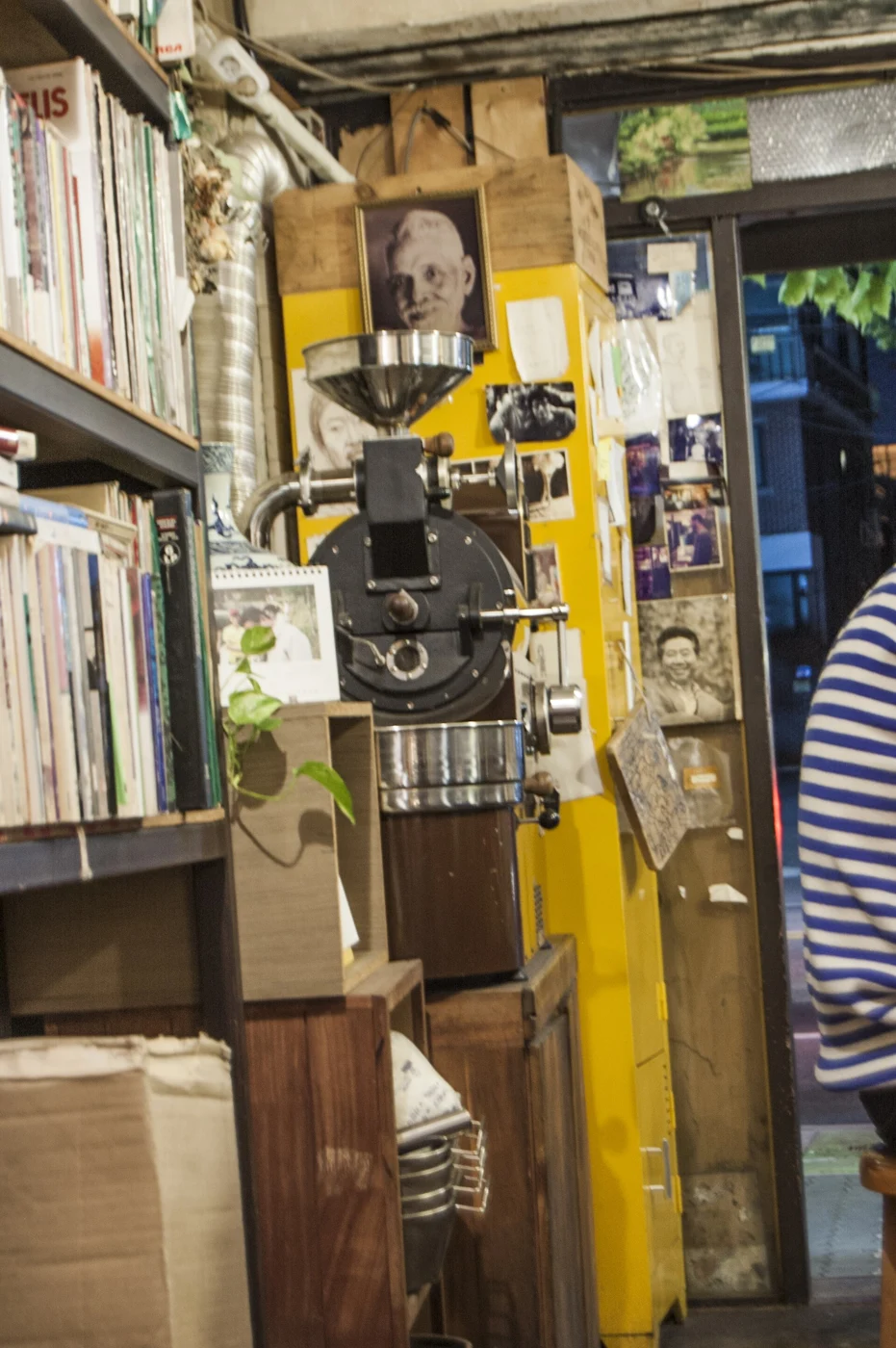
How did Korean cafés become places to spend time?
Dabang order markers, coffee mix, roasteries and a converted Seongsu factory: follow the work preparing a cup and changing a place.
↗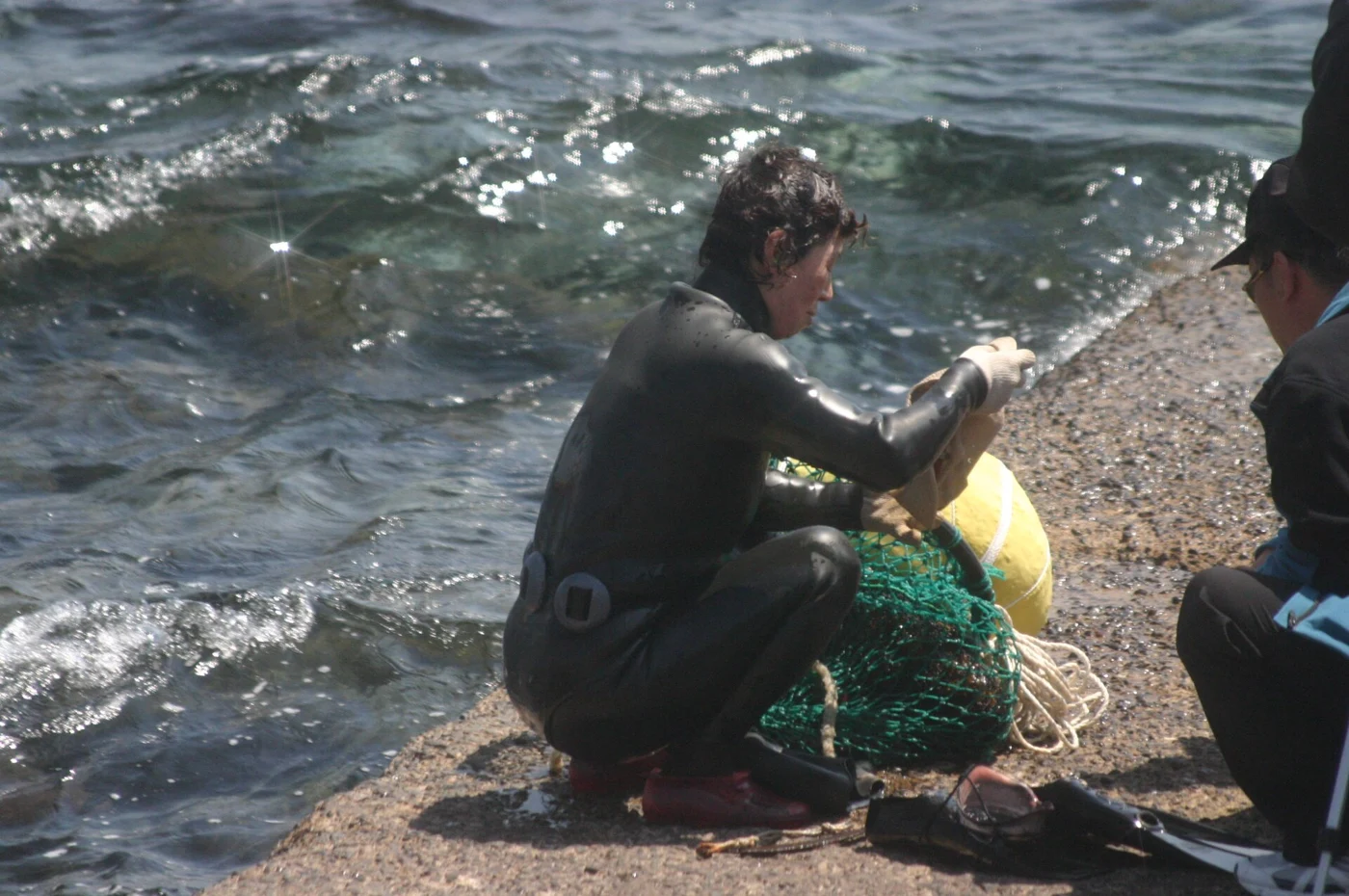
Jeju’s haenyeo bring more than seafood back from the sea
Floats, nets, iron tools, shore routes and boat journeys: follow the equipment, shared work and changing songs of Jeju’s women divers.
↗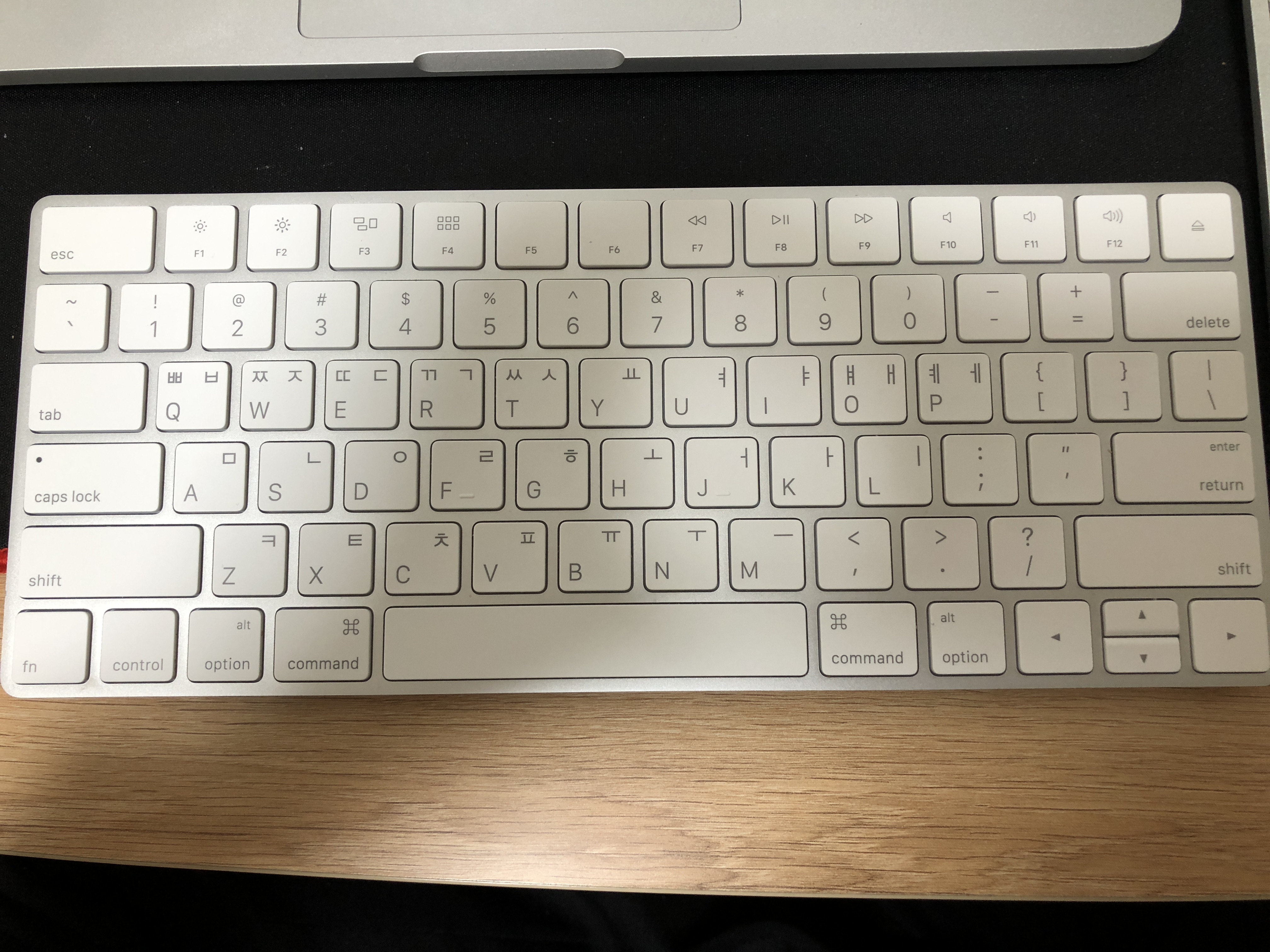
How Hangul travelled from letters to the world’s screens
An explanatory volume, newspaper machinery, spelling meetings and character data: the practical work that delivers writing to another reader.
↗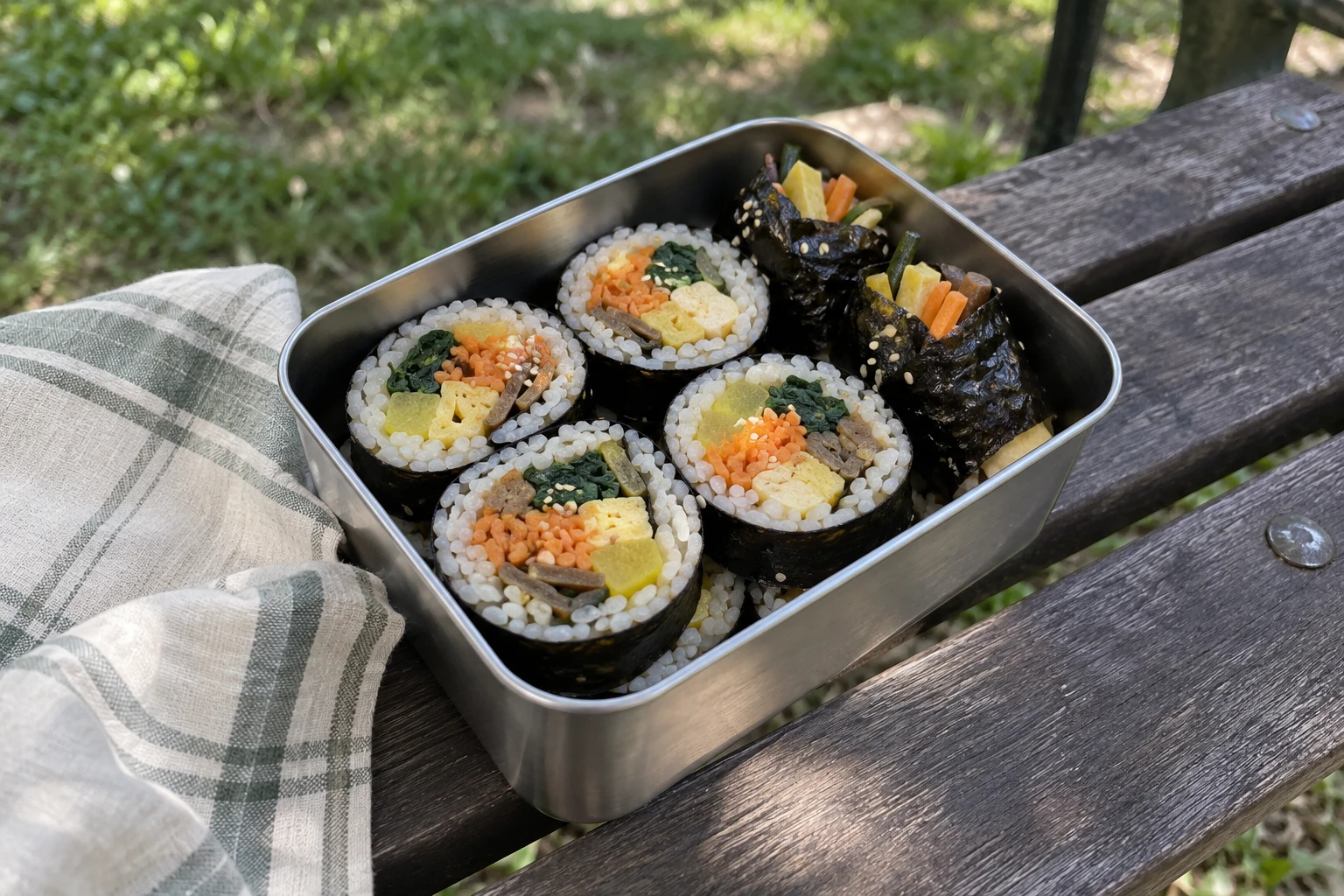
How a roll of gimbap became a meal
Cookbooks from 1966 and 1976, specialist-shop preparation, frozen manufacturing and overseas customer votes trace the work inside a portable meal.
↗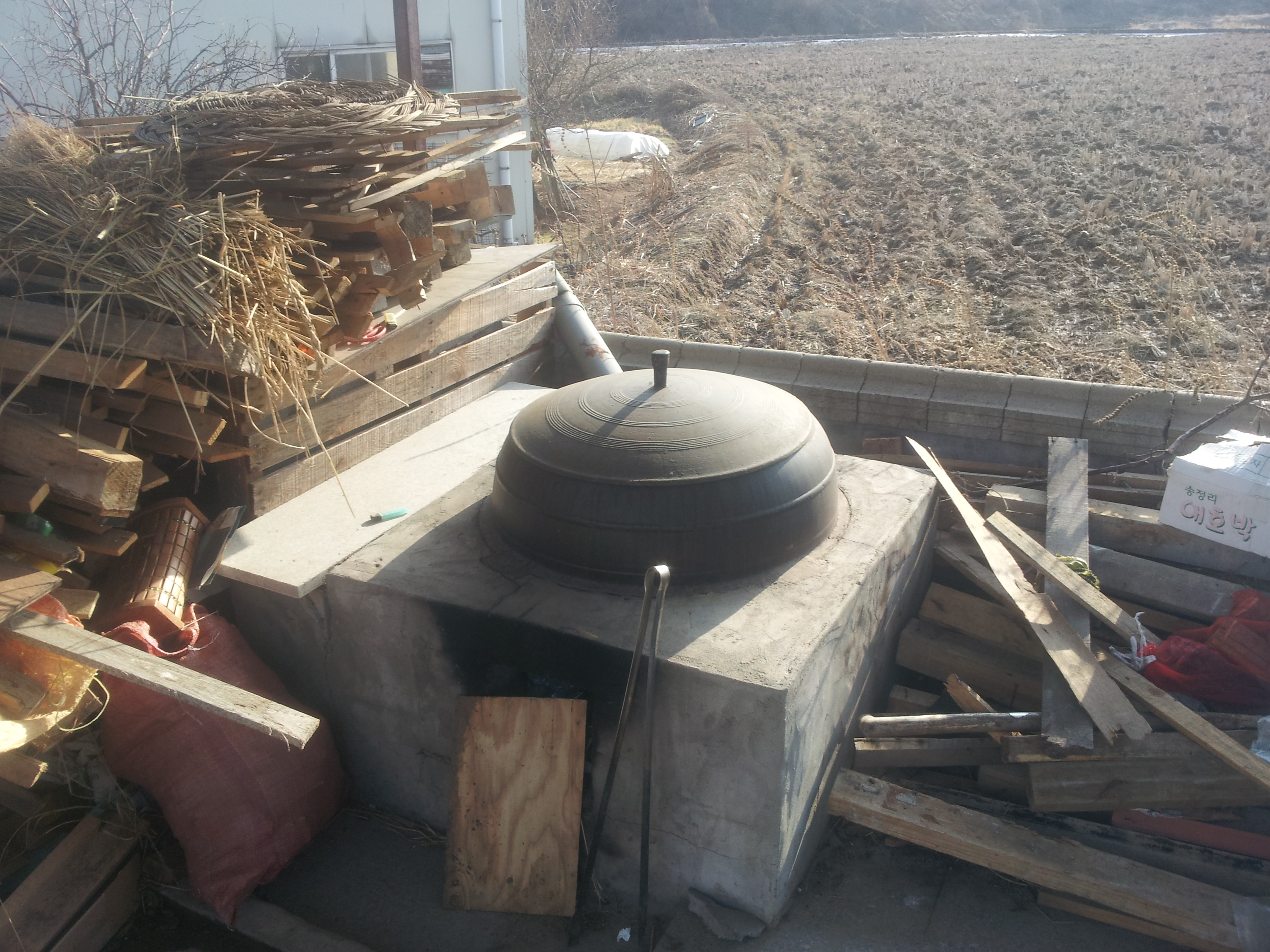
Why did the Korean home become warm from the floor up?
Channels, supported stones and drying earth came before circulating water. Follow the work that made and maintained ondol, and the changes to rooms, windows and furniture.
↗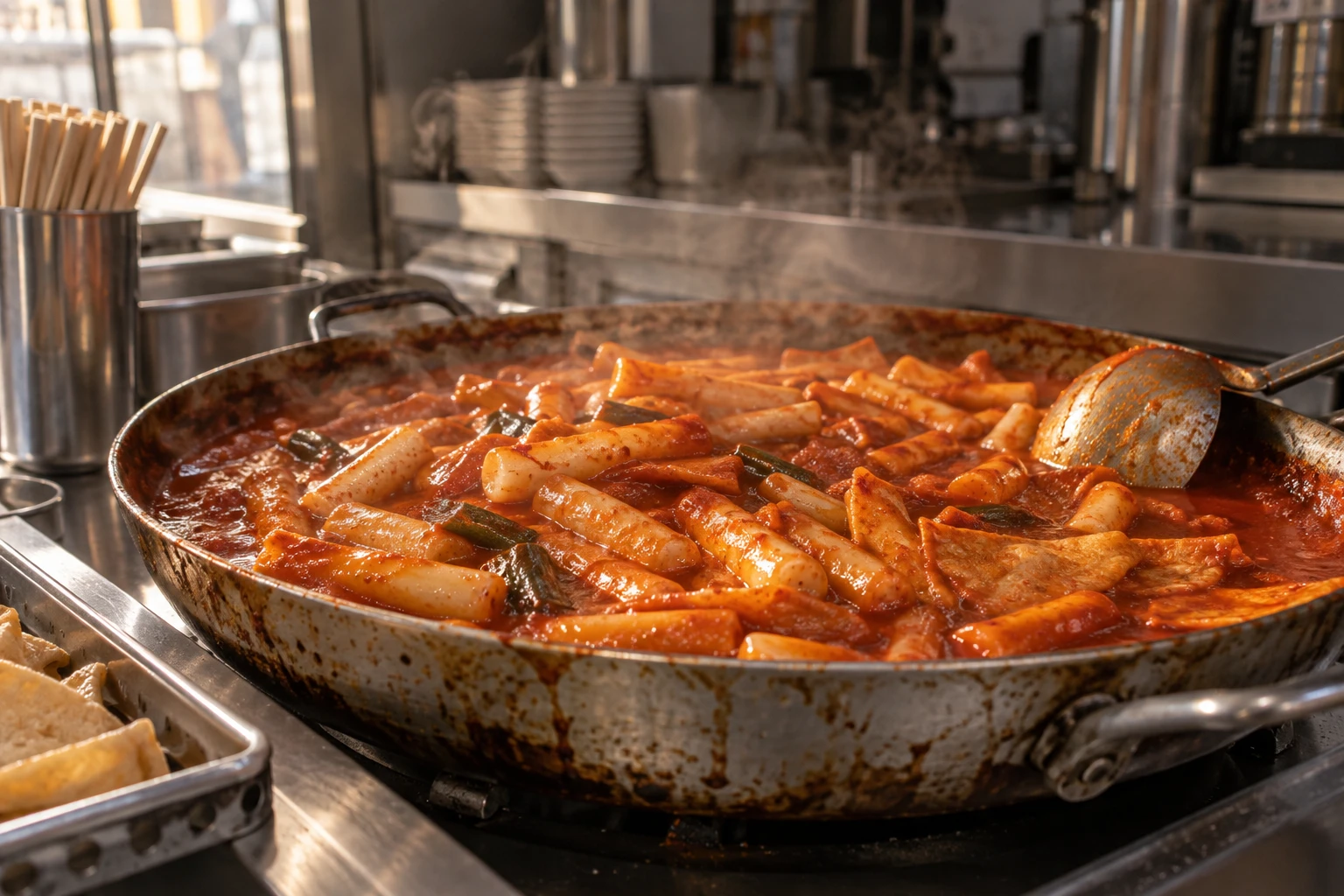
Tteokbokki lives through different times under one name
From soy-seasoned beef and rice cakes to Sindang-dong pots, a vendor’s tray, rosé sauce and microwave cups: the work behind changing meals.
↗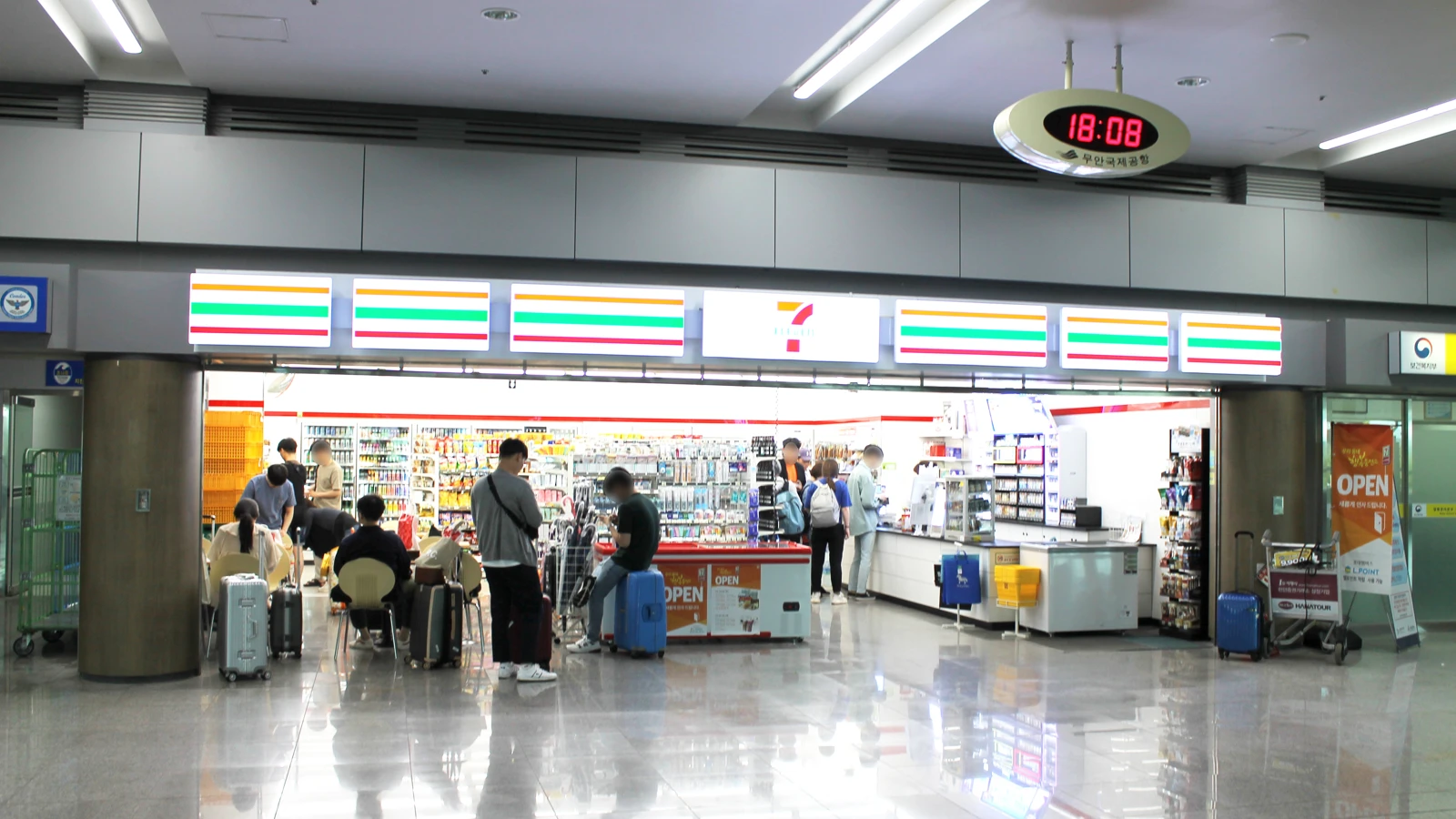
A Korean day inside one convenience store
Morning delivery, dates, triangular gimbap, a parcel scale and evening noodles: follow a small shop through the movements of its goods.
↗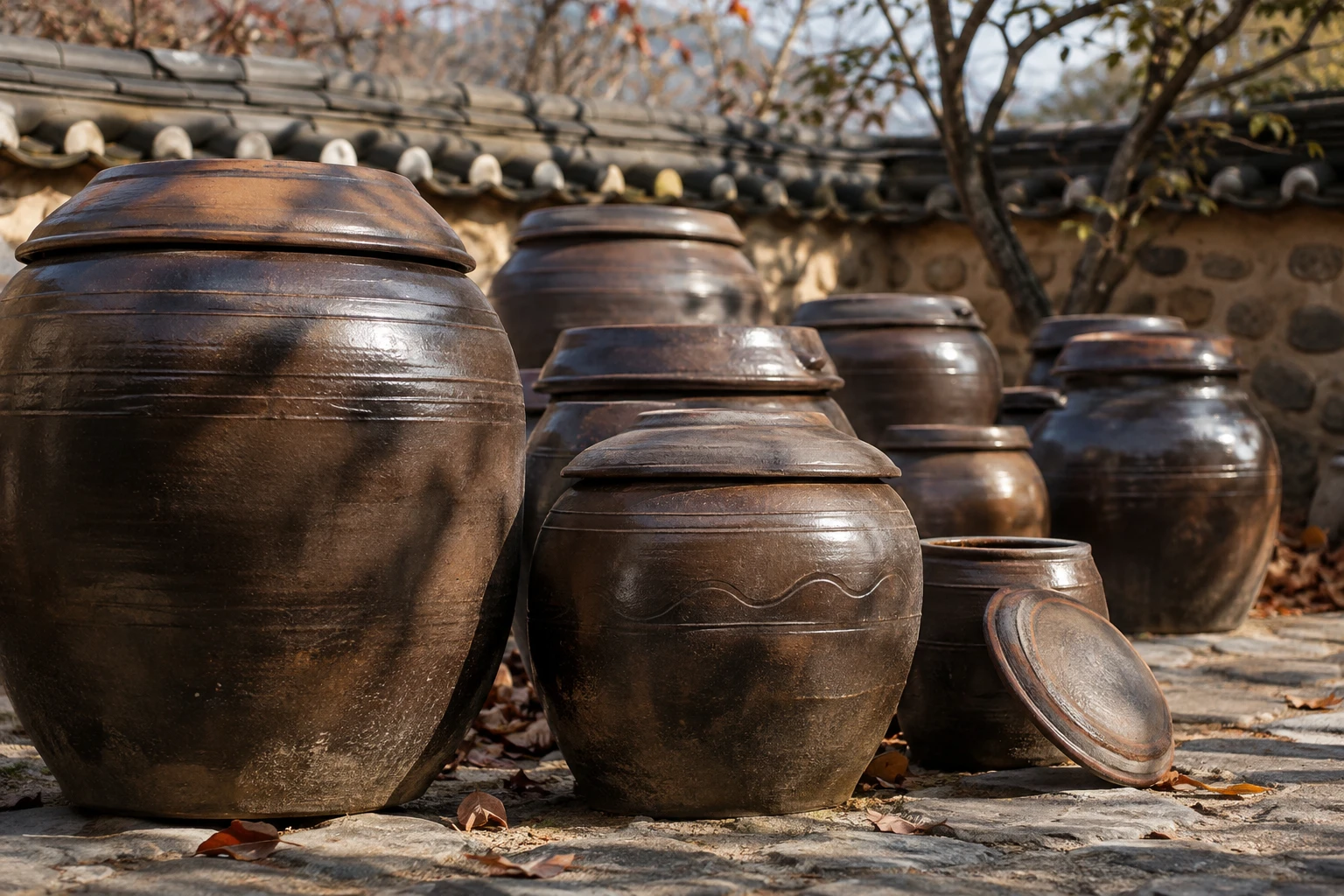
Korean flavour begins before the meal, in a jar
From cooked beans and meju to separating brine, choosing a soup texture and the grain route of gochujang: the earlier work behind tonight’s seasoning.
↗
The story stopped turning pages and began flowing down
From early online comics and episode production to a new character in Sweet Home and the sound work of Moving: how one story is made again.
↗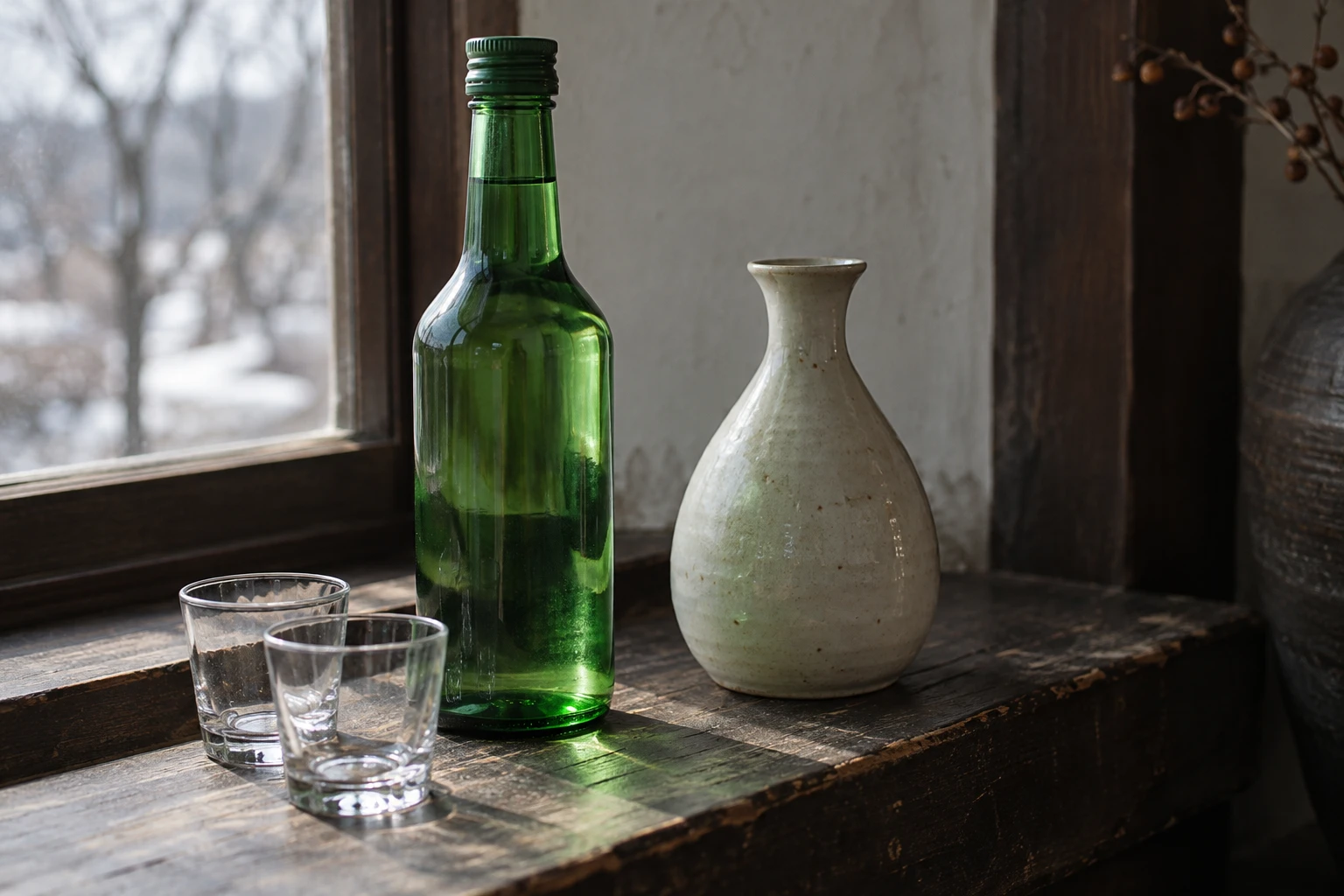
Soju is older than the green bottle
Follow the still, Andong’s factory and inherited skills, grain restrictions, modern distillation and overseas product lists.
↗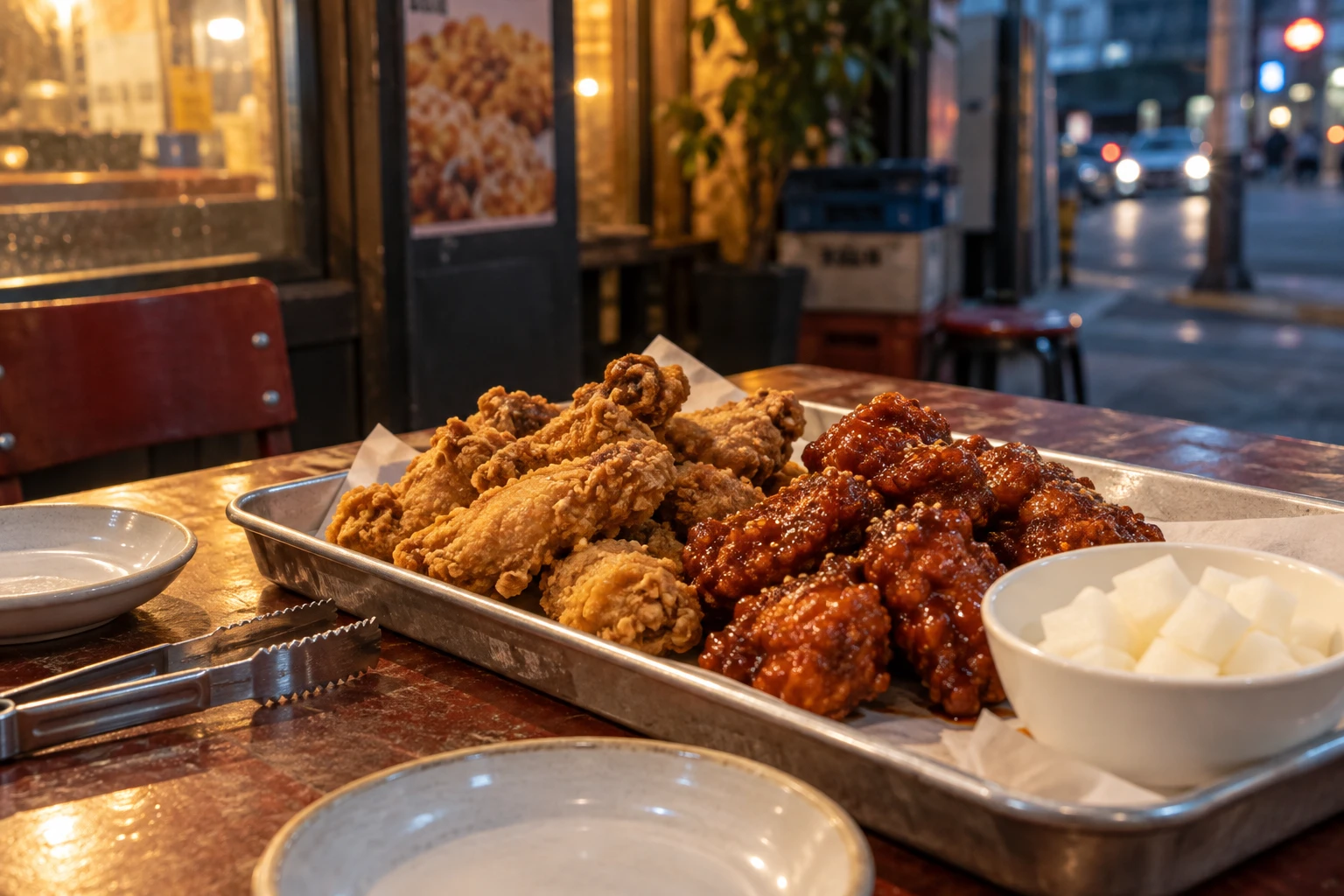
How a box of Korean chicken becomes a shared evening
Whole roasting, orders by part, coatings, sauce and half-and-half packaging follow the work of dividing, cooking and moving a bird.
↗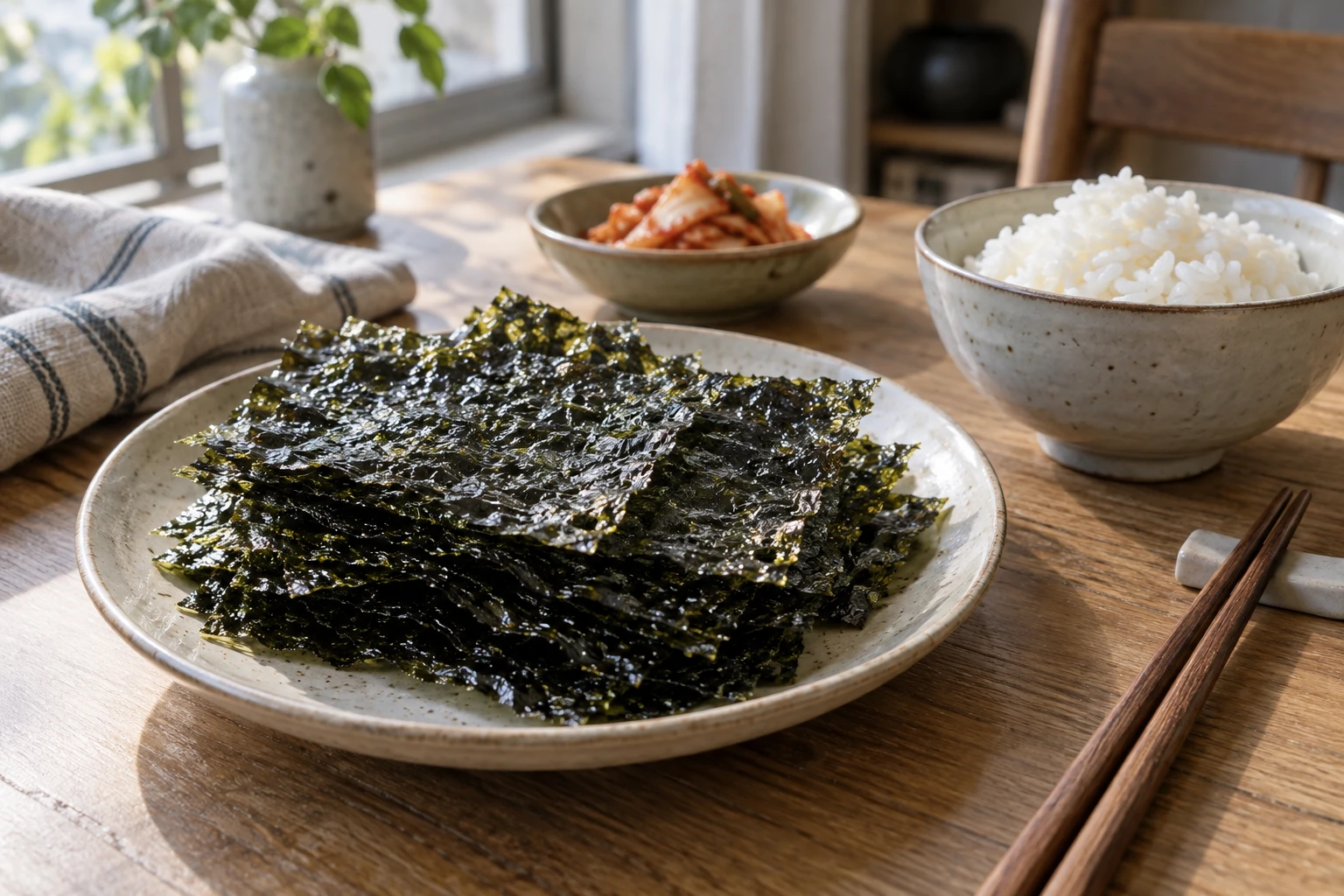
How a sheet of gim moved from the rice table to a snack packet
From cultivation nets to sheet forming and a second roast: the work behind Korean seaweed changes its shape, packaging and the way a hand reaches for it.
↗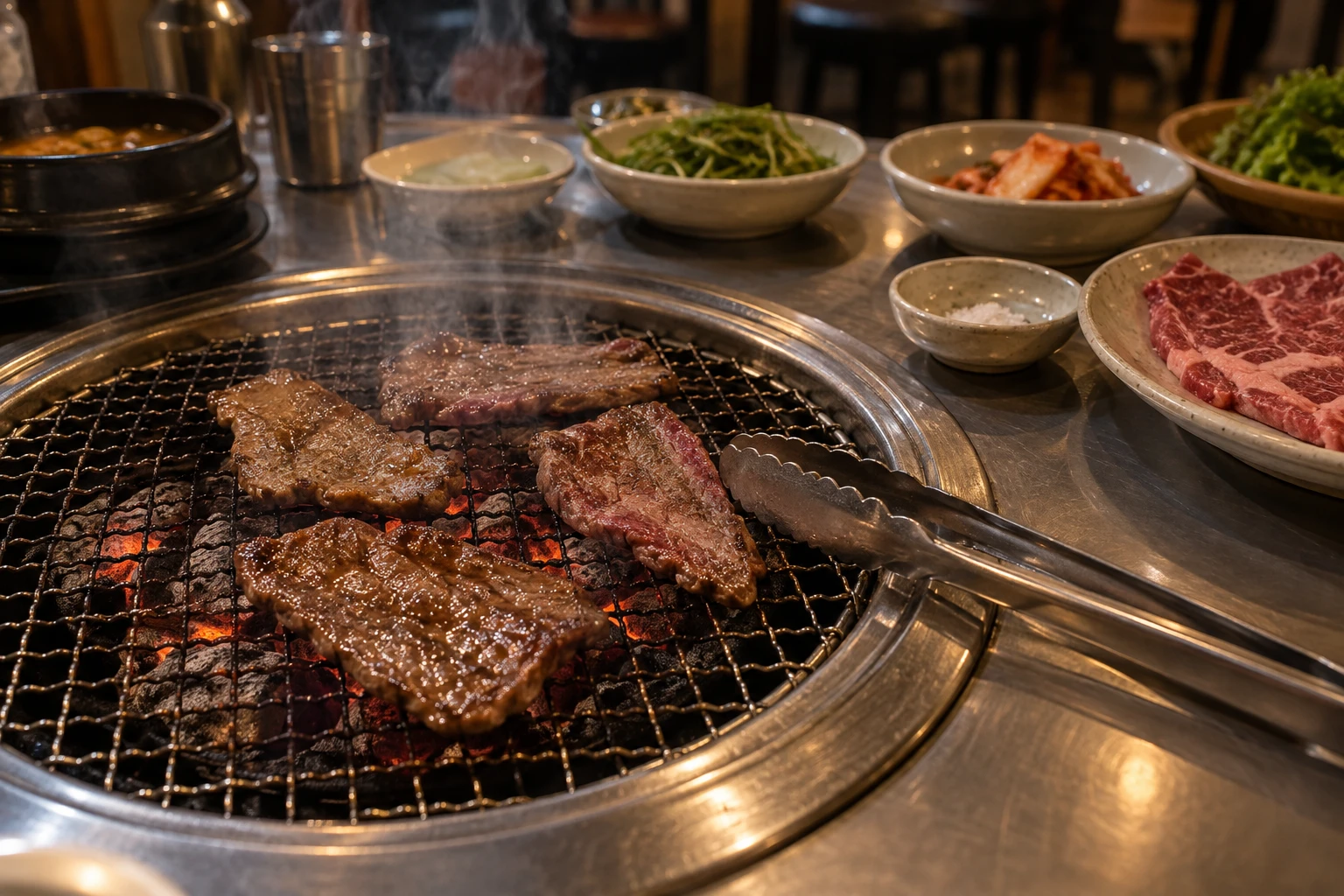
Hanwoo names the cattle. Why do we think of the taste?
From working cattle to the meat counter: breeding records, grades and the different decisions behind grilling, soup and bulgogi.
↗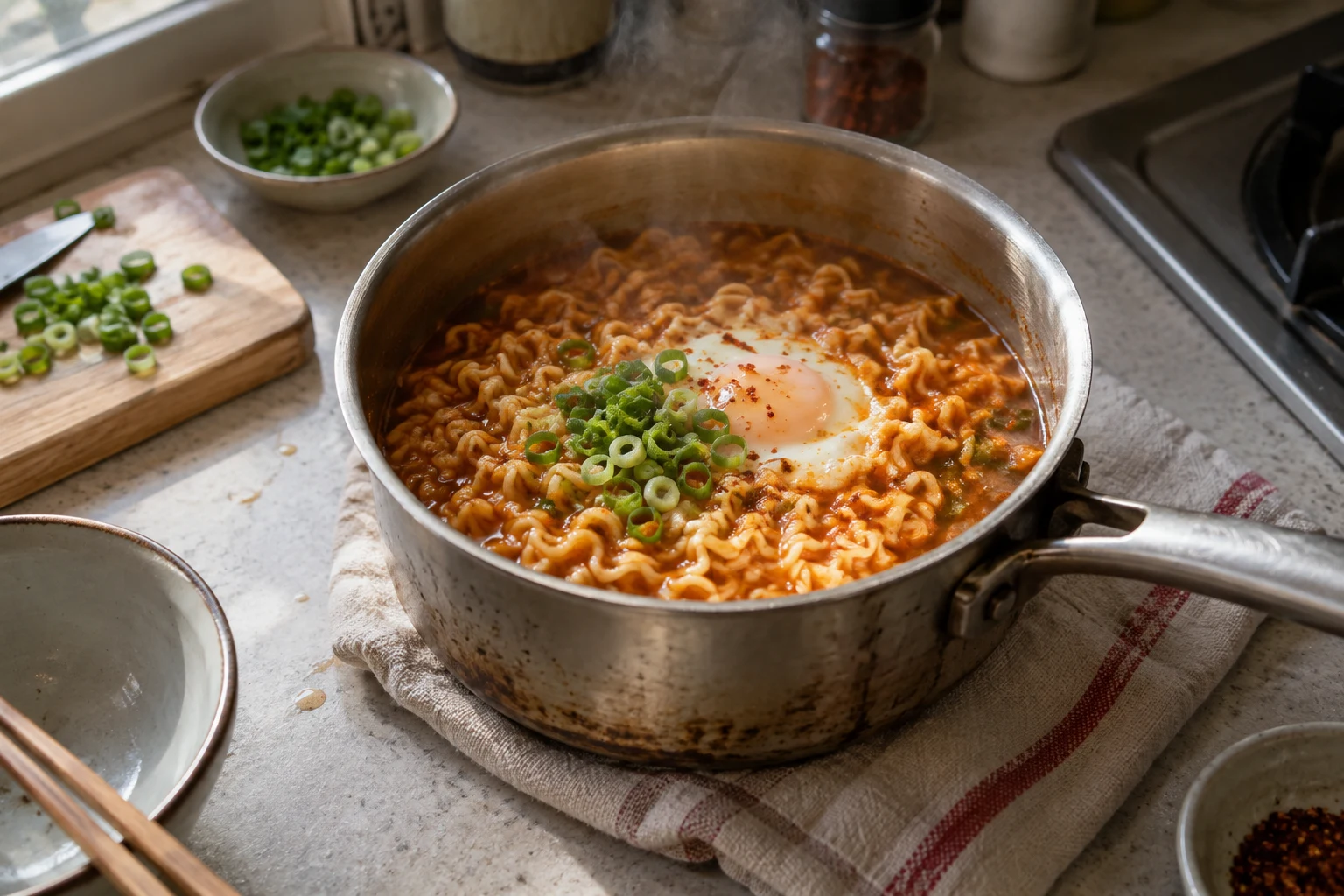
How a packet of ramyeon reached the world’s tables
From the 1958 invention and Korea’s first production in 1963 to broth, sauce, cups, overseas factories and 2025 exports.
↗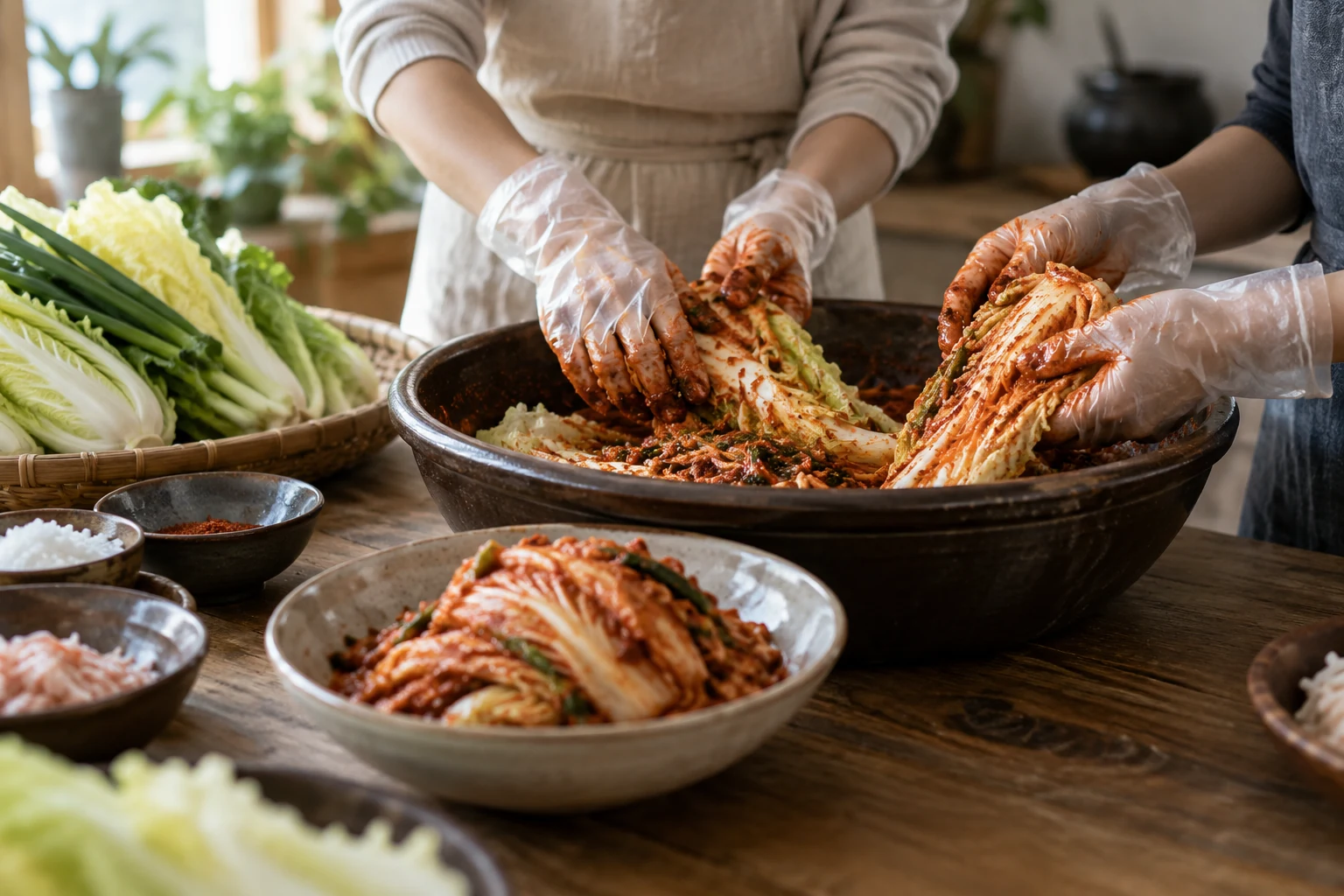
Kimchi is a food. Kimjang is a shared practice.
Follow salting, rinsing and filling into buried jars, smaller containers and shared meals: the concrete work behind a kimjang day.
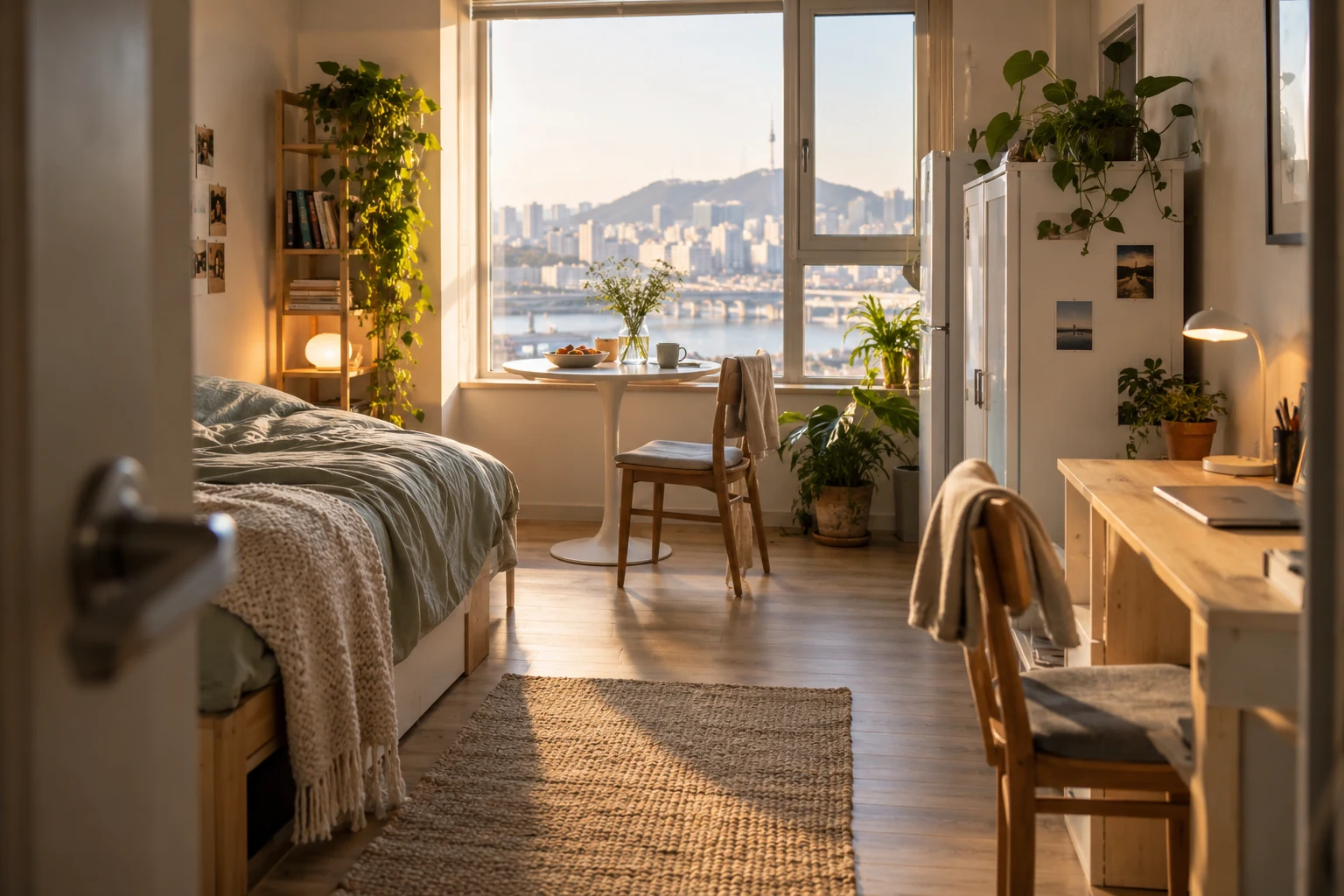
↗Hanbok: a garment and a way of wearing it.
From ribbon tying and quilted layers to brooches, uniforms and alterations: actual garments show how hanbok making meets another occasion of wear.
↗
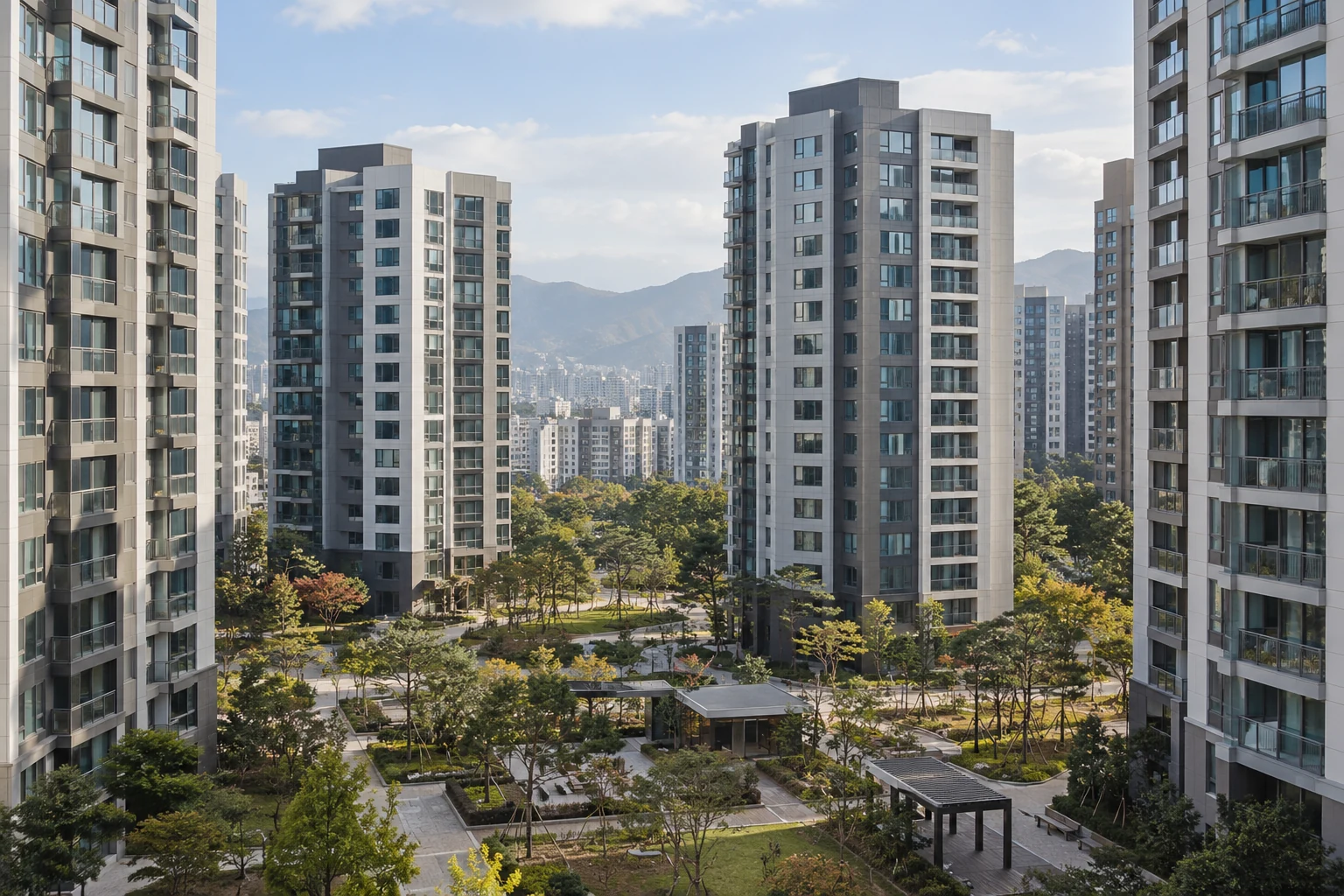
Smaller households, a different picture of Korean life.
Taking a purchase through several meals, retrieving washing after dinner, and navigating a hospital visit: follow the 2025 household figures into domestic work and actual routes to help.
↗
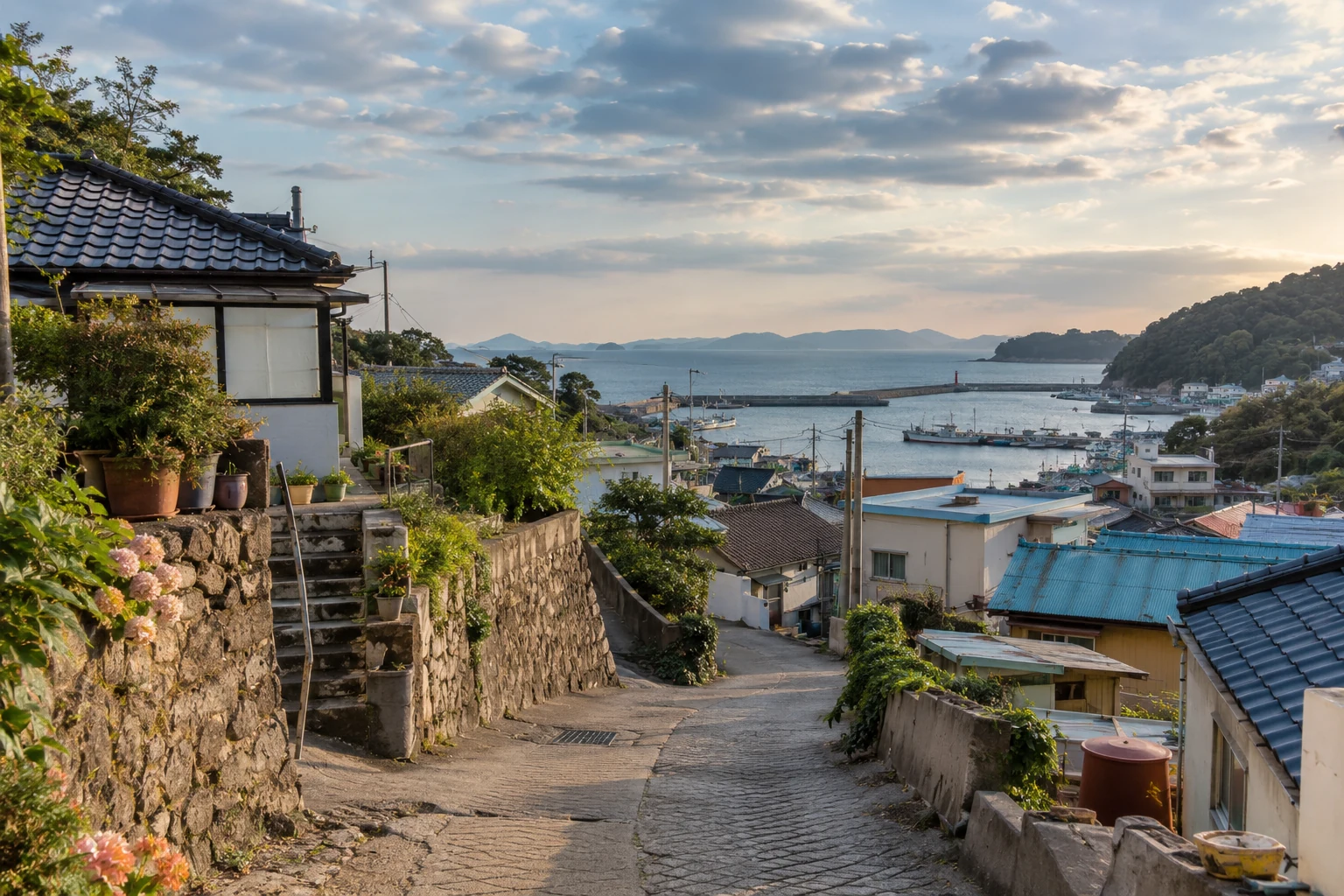
What does “a country of apartments” actually count?
65.8% of dwellings, 54.5% of households: follow the different counts, Mapo’s six-storey stairs, Yeouido’s lifts and the shells and presales that shaped life inside Korean apartments.
↗
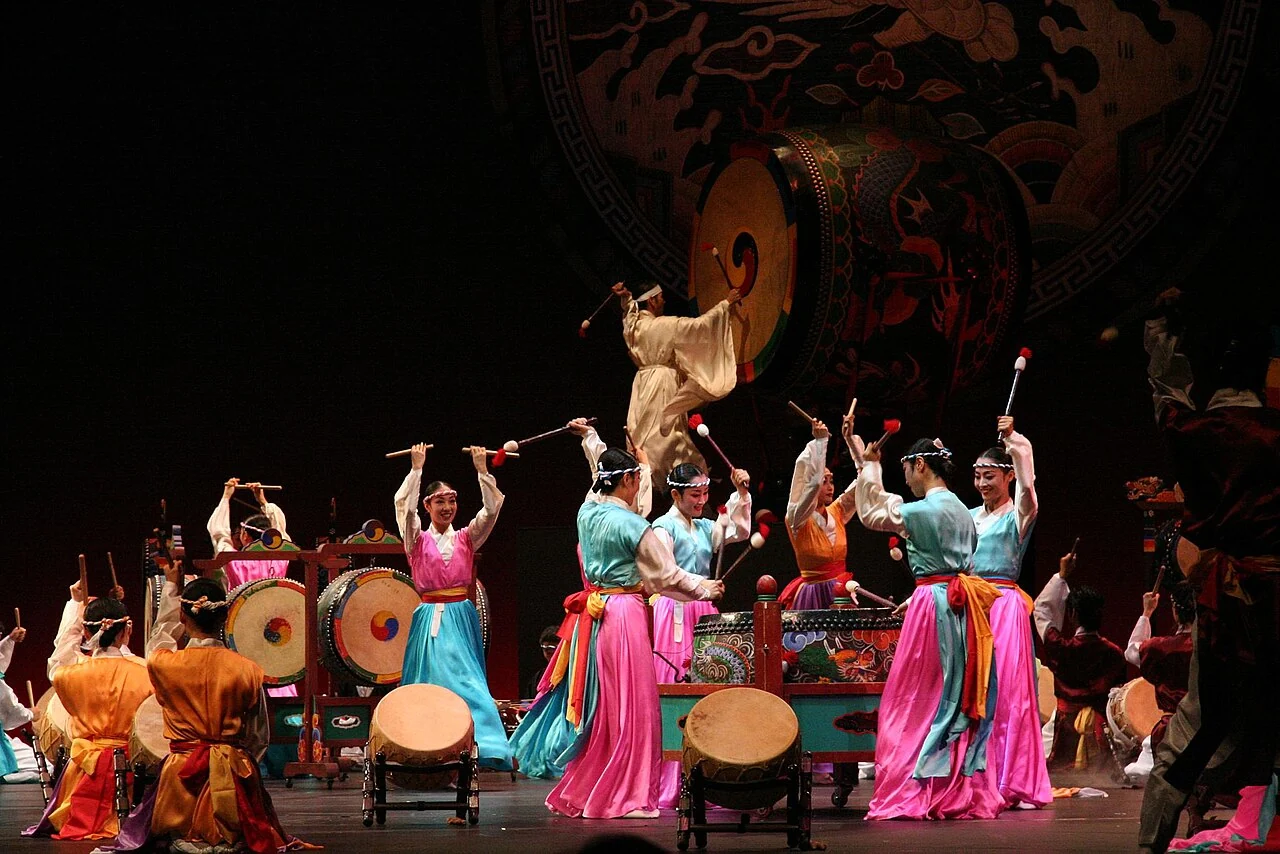
Korea is bigger than Seoul.
Ports, factories and neighbouring homes in Ulsan; different roads connecting schools and markets in Jeju. Follow ordinary connections to see Korea’s several centres beyond Seoul.
↗
K-culture has more than one doorway.
A TWICE recording, a translated book, vertical comics, NANTA, noodles and a compact: follow the work behind six entrances.
↗
What makes a cultural work feel Korean?
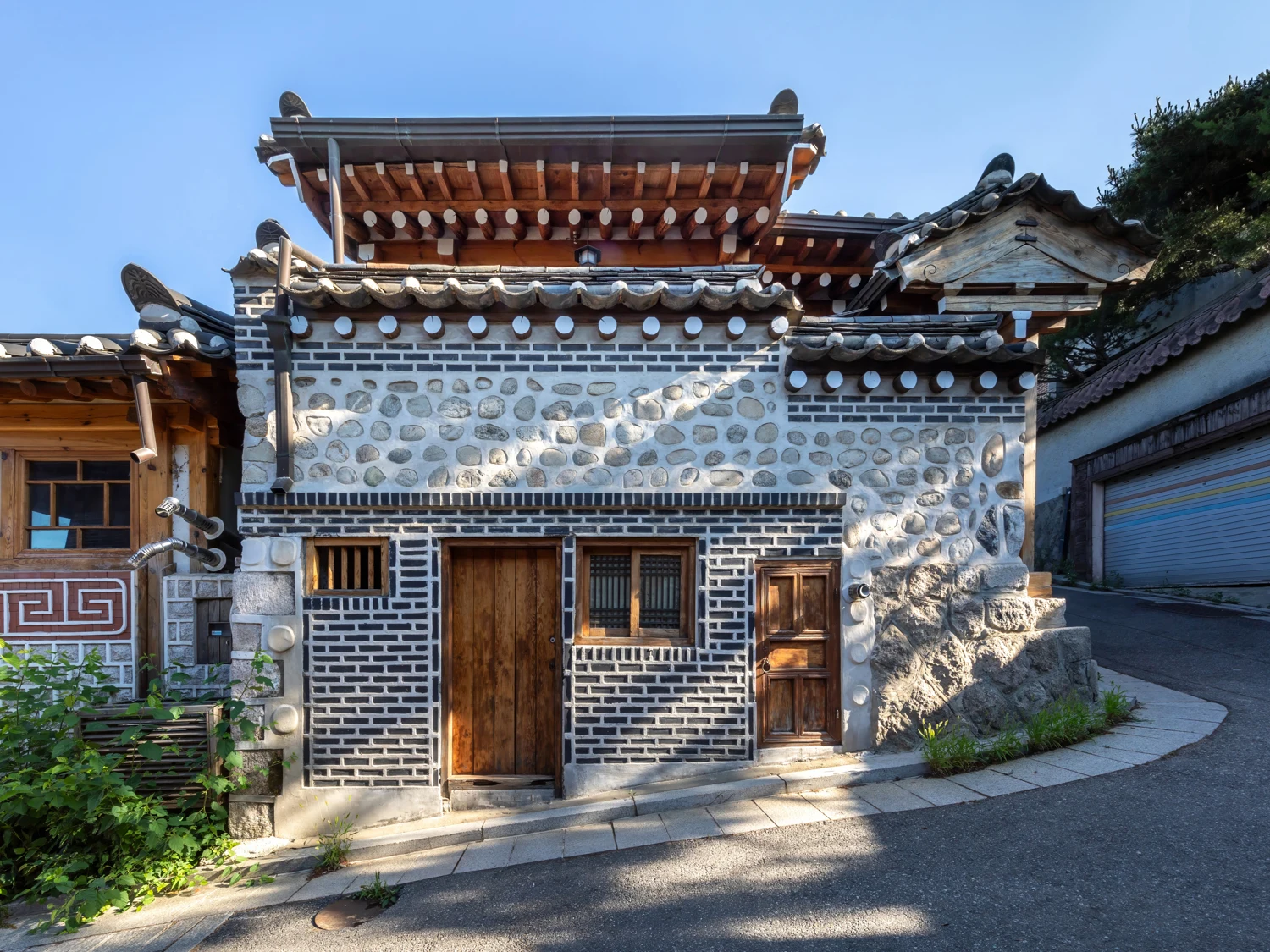
From Bukchon walls to a painted tiger and multilingual dialogue, KPop Demon Hunters and Pachinko show familiar materials beginning another life.
↗
Popularity does not mean everyone feels the same.
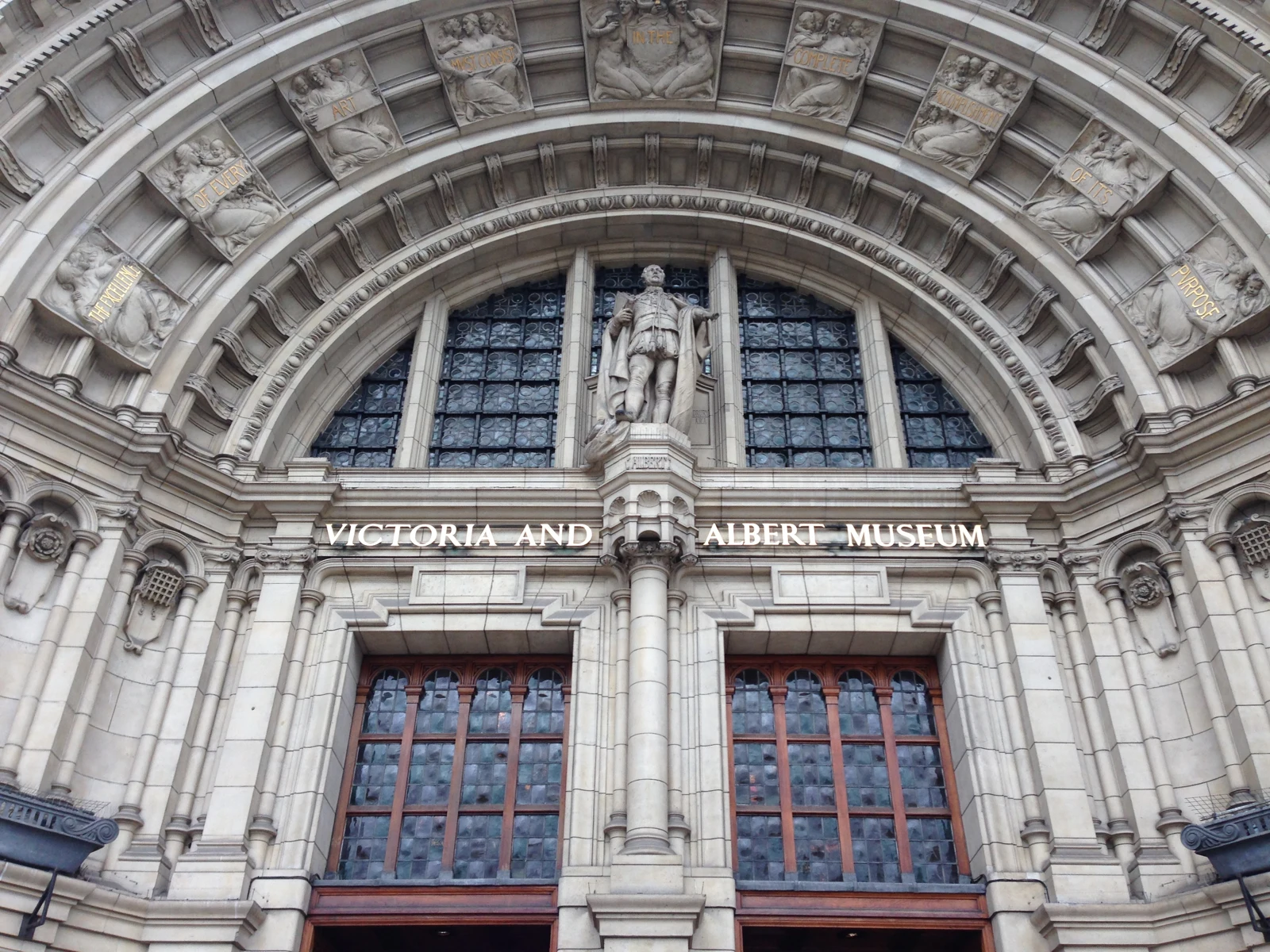
Readers in Catania, a Japanese Misaeng jury, Han Kang and a London exhibition reveal responses more particular than a single approval score.
↗CONNECTED, NOT COMPLETE
Follow the connections
Kimjang: from food to relationships
Salting, draining, radish filling and fermentation: follow a cabbage through the work that prepares many winter meals.
↗PIECE / P02Hanbok: form, practice and interpretation
A guide to hanbok's upper-and-lower structure, fastenings, layers and uses. Read a clothing tradition without reducing it to one historical outfit.
↗PIECE / P03Korean homes: change the unit, change the picture
How many separate homes fit inside one Korean building? Follow households, apartment units and officetels through real census classifications, worked examples and the routines behind the numbers.
↗PIECE / P04Places of Korea: names and boundaries
Seoul and its wider region, Suwon’s district and neighbourhood names, and the map after the 2026 integration. Real addresses, route lists and census examples explain the places behind Korean names.
↗PIECE / P05K-culture today: entrances and perspectives
From speaking and singing in KPop Demon Hunters to Misaeng, Han Kang’s The White Book, Parasite’s spaces and a prepared meal: follow the practical work inside cultural encounters.
↗PIECE / P06Ramyeon: from a meal to shelves abroad
Dough, steaming and drying prepare the noodles before water meets them again in a saucepan or a cup.
↗PIECE / P07Hanwoo: cattle identity and beef grades
Follow sire selection, carcass grading and the kitchen work that turns one animal into grilled beef, soup, bulgogi and braised side dishes.
↗PIECE / P08Gim: from harvested seaweed to sheets and snacks
Cultivation nets, washing and forming, drying and two rounds of roasting explain the textures of gimbap, seasoned gim and bugak.
↗PIECE / P09Korean chicken: whole birds, sauces and shared meals
Cutting, coating, hot oil and sauce: follow the preparation behind familiar chicken and the changes that continue inside its box.
↗PIECE / P10Soju: distilled and diluted, places and products
Follow starter-making, rice fermentation, the heating and cooling of a traditional still, and the blending of refined base alcohol.
↗PIECE / P11Gimbap: ingredients and places inside one roll
Rice moisture, drained greens, fine carrots and egg strips shape a roll that can be lifted intact. Follow the preparation, older cookbook examples and Chungmu accompaniments.
↗PIECE / P12Ondol: a heated floor and the life above it
Ondol is a structure for delivering heat through the floor, not just the sensation of warm feet. Distinguish traditional flues, modern water pipes and activities above them.
↗PIECE / P13Tteokbokki: several forms between cakes and seasoning
From making and separating cakes to reducing red broth, preparing soy-seasoned ingredients and finishing packaged products.
↗PIECE / P14Korean convenience stores: products, meals and neighborhood errands
From the Garak Siyeong timeline to lunch-box packaging, chilled delivery, date-aware checkout and parcel labels: the work behind a short visit.
↗PIECE / P15Jang: fermentation and the time of transmission
Follow cooked beans into meju, liquid away from solids, grain starch into sugars and a factory batch through pressing and filtration. The work continues when the seasoning enters a meal.
↗PIECE / P16Webtoons: vertical screens and continuing episodes
Follow panel planning, linework, color and lettering, then see how Misaeng’s translations and dramas change the way a story is read.
↗PIECE / P17Hangul: letters, syllable blocks and the Korean script
Separate script from language, basic letters from syllables, and written finals from pronunciation. A reference to Hangul structure, history and digital text.
↗EDITOR’S ROUTE
Read a little further
From a dish to a wider view of K-culture
Start with kimchi and kimjang, then explore different entrances, cultural clues and audience perspectives.
From clothing to homes and places
Move through a clothing practice, household sizes, housing stock and geographic boundaries.